


Commission launches debate on ethnic minority entrepreneurs
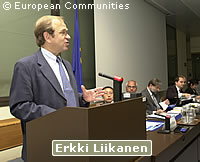
The European Commission has opened a debate on entrepreneurship among ethnic minority groups in Europe, arguing that without sufficient business support mechanisms and involvement in policy making, the significant economic potential shown by this section of society will remain untapped. At a recent conference on 'ethnic minority entrepreneurs' in Brussels, around 200 policy makers, small business owners and other professional representatives from across Europe gathered to examine the particular problems facing ethnic minority businesses, and to exchange good practices. In his opening address, Commissioner for Enterprise and the Information Society, Erkki Liikanen, underscored the importance of the debate: 'If we want Europe to become more competitive and a more dynamic knowledge based economy [...] we need more entrepreneurs. And immigrants tend to be more entrepreneurial.' Ethnic minority entrepreneurs are defined as entrepreneurs who are either immigrants or have an immigrant background. While little research has been carried out on the entrepreneurial instinct of ethnic minorities compared with other groups of society, Mr Liikanen pointed to research from Denmark, Sweden and the UK suggesting that immigrants are more likely to start businesses than the majority of the population. Given the general lack of entrepreneurial drive in Europe, the impact of immigration in promoting entrepreneurship is becoming increasingly important in almost all Member States, and is something the Commission is keen to support. In order to do so, however, several issues specific to ethnic minority businesses must first be addressed. The first relates to the fact that many immigrant entrepreneurs rely almost exclusively on social networks within their own ethnic group for access to markets, customers, finance and labour. Whilst Mr Liikanen recognised the important facilitating role that such networks can play, he warned that exclusive reliance on them can cause difficulties when businesses try to expand into mainstream markets. Mr Liikanen then highlighted the need for ethnic minority entrepreneurs to be more actively involved in political dialogue. 'As politicians we need accurate information on the specific needs and demands from all those concerned by our policies. If we do not get this information, it is sometimes difficult to take these needs and demands into consideration.' Finally, more must be done to make these small business owners more aware of the existence of publicly available services and support. Connected to this, the Commissioner stated that: 'Perceived discrimination when addressing support service providers is unfortunately also part of the problem.' Following the event, the Commission has produced a list of conference conclusions that include several key areas for action. It will aim to strengthen cooperation with other European institutions on the issue, and examine the possibility of launching a study of good practices in the field of ethnic minority entrepreneurship. Networking between the public administrations of Member States and accession countries will be encouraged with a view to establishing an informal network of national and European representatives to further examine the issue. Finally, the Commission will promote the creation of links between professional groups representing ethnic minority entrepreneurs and mainstream professional organisations. 'I hope that this conference will be an important step forward in highlighting the potential of, and the obstacles to, ethnic minority entrepreneurship. I also hope that it will set in motion a process of exchanging good practices between the administrations of Member States as well as among professional organisations,' Mr Liikanen concluded.