


Research is now part of the European identity, says outgoing MEP Rolf Linkohr
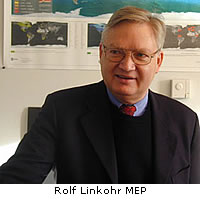
For the past quarter of a century, Rolf Linkohr has served as a German Member of the European Parliament, and during that time he has witnessed great changes in the Community's approach to science and technology. Dr Linkohr has confirmed that he plans to step down before next European Parliament elections on 10 June, but before he leaves office, CORDIS News asked him how the EU's policies towards research have evolved during his time in office. '25 years ago, the Union's research budget was 120 million euro a year, now it stands at over 4 billion euro per year - that is a great leap forward,' he said. Dr Linkohr added that he hopes the next generation of European policy makers can follow this trend in future. 'This is the most important thing.' Almost as important, though, are the changes in attitude that Dr Linkohr has witnessed since arriving in Brussels in 1979. 'At the beginning, national attitudes were dominant, but now a European network has been created. The European Research Area [ERA] concept proves that we are much more European in our approach than before. 'Research is no longer simply a technical means of solving problems, it has become part of the European identity,' he argued. Dr Linkohr has also noticed a shift in attitudes among the leaders of the EU's Member States. Governments understand that future success and prosperity are dependent on efforts made in education, science and technology, he said, and politicians are now fully well aware of the need to invest in research and development (R&D), even if they don't always do all that is required. 'At least there is a sense of bad conscience about the failure to act,' Dr Linkohr added. One of Dr Linkohr's most high profile campaigns in recent months has been his attempt to significantly increase the proportion of the EU's budget spent on research. His own initiative report, adopted by Parliament in November 2003, called for a 70 per cent increase in the Framework Programme budget, and the establishment of a European Research Council (ERC) to increase financial support for basic research. 'The Parliament supports the courageous proposals put forward by the Commission in their financial perspectives, but we will have to wait and see what happens when the proposals go before Council,' said Dr Linkohr. 'But it's not just a question of money, it's a question of how EU support for research is structured as well,' he said. Dr Linkohr described to CORDIS News his vision of a European research policy built upon three pillars. First, there is the Framework Programme, which is primarily designed to support applied research. Next comes the ERC, although he admits that more discussion is needed on the structure of such a body. For the third pillar, Dr Linkohr proposes the creation of a European innovation area, or council, with a focus on improving the research and innovation capacity of small and medium sized enterprises (SMEs) in Europe. 'SMEs are our real weakness in Europe,' he argues. Another area where Europe has faced a number of difficulties has been in the ethical assessment of research. 'Discussions on the ethics of research into biotechnology, nuclear energy and stem cells have again exposed our national sensitivities. If we want a genuine ERA, then we have to look for compromises at a European level,' believes Dr Linkohr. The European Parliament's scientific and technological options assessment unit, which Dr Linkohr chaired from 1989 to 1994, has helped to raise ethical questions on a European level, he said, and the Commission has done a lot also, but he still believes that this issue should command greater attention. Asked to identify any other areas where the EU needs to improve its efforts, Dr Linkohr stressed the importance of global cooperation, particularly with the developing world. 'There is a cultural and philosophical background to research - a sense of curiosity and optimism - that must be recognised. [...] If we can share this effort with the rest of the world, it could signal a new renaissance, with Europe becoming the new focus for research in the world.' Dr Linkohr had a message for the new MEPs and Commissioners that will take up the baton where their predecessors left off: 'They must be firm on their financial perspectives, they must fight for a bigger role for research, and they must win allies in the fight for an increased share of the Community budget for R&D.' When asked what he planned to do on leaving the European Parliament in June, Dr Linkohr said that, as yet, he has no concrete plans. 'Whatever I do, my aim will still be to progress with this European project. I will never stop working to promote science and technology in Europe,' he concluded.