


Eureka project delivers more eco-friendly polystyrene
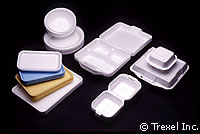
A Dutch-German collaboration has developed a new, more environmentally friendly method of producing products made from polystyrene, thanks to the support of Eureka, the European network for market-oriented research and development. Polystyrene foam is used in a variety of applications, from insulation and packaging materials to drinking cups. All of these products, however, are produced from a single starting material - spherical beads of expandable polystyrene (EPS). Product manufacturers expand and mould these EPS beads to their required shape using a blowing agent, usually pentane. However, pentane is an inflammable volatile organic compound (VOC) and up to half of the amount used remains in the EPS after processing, and is slowly released into the atmosphere during storage and use. 'Concern is growing throughout Europe and the USA about increasing pentane emissions and legislation to limit it is already planned in Switzerland, Austria, and Sweden,' explains Wolfgang Teubert, managing director of German partner Teubert Maschinenbau. Their project, VOC-free EPS, answered the increasing concerns surrounding pentane use by developing the world's first water-blown expandable polystyrene bead. 'The new patented process creates a molecular bond encapsulating starch in a shell of polystyrene. The chemically bonded starch absorbs micro-drops of water, which becomes a safer, more environmentally friendly agent inside the beads,' explained Willem van Liemt, research team leader at the Dutch partner Nova Chemicals. Not only did the partners develop a new expansion process, however, but also a new EPS expansion machine. As a result, while it is currently not possible to avoid the use of pentane entirely, the project did achieve a considerable reduction in VOC emissions resulting from polystyrene foam, an improvement in productivity for foam moulders, and improved safety throughout the process. Due to the existence of stricter legislative controls on VOC releases in the US, the team may take the unusual step of commercially launching the product and process there, before introducing them to Europe at a later date. 'The Eureka programme has been vital in facilitating the international collaboration required for this project,' acknowledged Mr van Liemt.
Countries
Germany, Netherlands