


Brinkhorst calls for new social model for EU
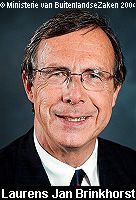
Only by working longer and moving towards the US social model can Europe hope to attain its Lisbon goals, according to Laurens Jan Brinkhorst, Dutch Minister of Economy, speaking at an event in Brussels on 7 October. Modernising the European social model is a matter of urgency if Europe wants to maintain its model of choice in the long term and close the productivity gap with the US, believes the minister 'I will argue that the updated European social model should differ distinctly from the current one' explained Mr Brinkhorst. 'It will inevitably resemble the US model more than is the case today. But it will still be a European model, reflecting European preferences for social inclusion and environment. The main conditions for achieving this are enhancing growth and employability,' he said. The current European model is not performing adequately said Mr Brinkhorst pointing out how far the EU had slipped behind the US. 'Since the early 1990s, the US has largely outpaced the EU in terms of economic growth. From 1991 to 2003, the US economy grew by no less than 47 per cent in total, whereas the EU economy achieved only 28 per cent growth.' Mr Brinkhorst also drew attention to the fact that in 2003, the US GDP per capita was 55 per cent higher than the EU's. Economic growth is crucial for a high and sustainable standard of living for future generations, and the only way to achieve this is to work longer hours and for more years, said the minister. Flexibility of working time must also increase if we want Europe to fare better in times of increasing global competition, added Mr Brinkhorst. 'If Europeans worked for two hours longer a week, EU GDP could increase by about 6 per cent,' said Mr Brinkhorst, demonstrating his claim that 'a small change can make a big difference.' 'We need to get into a higher gear and redirect the [Lisbon] agenda to target enhancing economic growth, employment and competition,' he concluded, calling for more flexible labour markets, the stimulation of innovation through research excellence, improved legislation, and lower taxes for more productivity and a better business climate.
Countries
Netherlands