


EPP group 'revisits' the Lisbon agenda
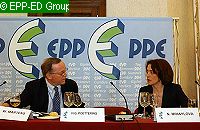
The Group of the European People's Party (EPP) in the European Parliament has published proposals urging a rethink of the Lisbon agenda in light of the limited impact that the EU's competitiveness strategy has had on growth in its first four years. The grouping of Christian and European Democrat MEPs point out that when the Lisbon strategy was set in 2000, the economic outlook for Europe pointed to a period of strong growth. As a result, and especially in light of lower than expected growth rates in recent years, they argue that the strategy did not put sufficient emphasis on growth creation. 'Now, four years later, the Lisbon goals seem to be almost out of reach. Though some individual Member States' development and competitiveness has improved substantially, Europe [overall] is lacking growth, competitiveness and economic dynamics,' state the proposals. As to the reasons behind the Lisbon strategy's poor performance to date, the EPP points to a number of perceived failings. The EU and its Member States are failing to encourage people to become entrepreneurs or to create and entrepreneurial environment in Europe, they allege. Furthermore, the EPP argue that while research and innovation are rightly recognised as key elements in Europe's competitiveness, Europe does not yet fully understand that funding research and development (R&D) merely fosters inventions, and not innovation, which is the real driving force behind growth. Other failures highlighted in the proposals include the EU's inability to reform the internal market in areas such as the Community Patent and the mutual recognition of professional qualifications. Member States are also criticised for their failure to bolster the financing and commercialisation of research, and for not reforming education and vocational training in line with Europe's objective of creating a knowledge-based economy. Having set out the limitations of the Lisbon agenda in its current form, the EPP goes on to propose a series of more than 20 reforms aimed at providing a 'new start' for the process. Top of the list is a call to reconfirm and rebalance the overall strategy, with a clear focus on its most important elements - competitiveness, employment and social partnership. '[The] Lisbon strategy's multi-faceted ambitions need to be reduced and concentrate on the main goals,' the party says, urging governments and EU institutions to develop annual work plans. Also featuring prominently in the list of reforms is an appeal to give the Lisbon strategy a new name. The EPP suggests calling the revamped strategy 'The agenda for growth, prosperity and employment', before adding that 'the change should not only be cosmetic, but include the necessary enforcement of strategies and policy instruments.' Identifying a need to secure more Member State commitment to the agenda's aims, the EPP calls on the Council and the Commission to analyse the goals of specific EU countries in order to better emphasise their responsibilities within the Lisbon strategy. Other suggestions cover the reduction of bureaucracy and reform of corporate tax systems to improve the job creation potential of small businesses, reaching agreement on the Community Patent and the mutual recognition of professional qualifications, and improving framework conditions for public and private R&D spending. Finally, on an institutional level, the EPP calls on EU governments to ensure the permanent involvement of strong national ministers in the Competitiveness Council, and urges the European Parliament to form a temporary parliamentary committee of the Lisbon Agenda in order to underline its importance to the EU.