


Public and private sectors see partnership as key to innovation
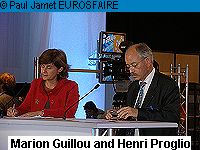
The key to a competitive and innovative Europe lies in partnerships, according to experts and decision-makers from both the public and private sectors. At a roundtable on the role of research in Europe during the recent European research and innovation conference that took place in Paris from 3 to 5 June, the speakers also noted that increasing the research budget is important as long as it goes hand in hand with increased efficiency. 'The US understood early on which were the key technologies to invest in,' stated Marion Guillou, President Director General of INRA (the French national institute for agronomic research). 'The EU is now trying to stay in the race but it is difficult and a strong challenge. The only way to achieve this and hopefully even surpass the US is to create and increase collaborations and partnerships to obtain more innovative results. Indeed, increasing the research budget alone does not necessarily mean increased productivity,' she explained. According to Dr Guillou, since both the future of Europe and the future of companies depend upon research, this leads to a common ambition and therefore mutual recognition. Philippe Carli, President of Siemens France, agreed with Dr Guillou's analysis, insisting on the increasing need for large joint actions between public and private research entities, and between countries. 'Major companies in general never stop innovating and investing in research and development (R&D). At Siemens for example, we spend five million euro a year on research. For us, key partnerships are developed when participating in collaborative projects through the EU's framework programme and the Eureka programmes, 'said Mr Carli. Pascal Viginier executive director of R&D at France Telecom also emphasised the benefits of participating in EU research programmes to help develop multinational networks. 'Partnerships offer the possibility of quicker innovation,' said Mr Viginier. 'By adding up the strength of two or more partners, companies are able to get their first results much faster than they would on their own. In the telecommunication sector, for example, finished products can be obtained within 18 to 24 months of the start of a partnership.' Partnership also means being able to make use of the best of innovation, innovate better, and ensure that all companies involved remain on top, added Mr Viginier. Asked what makes a successful partnership, Mr Viginier explained that what is needed is strong engagement over a limited period of time for a specific purpose. 'It is essential that the business objectives of all companies involved are either identical or complementary. Secondly, the relation must be symmetrical, meaning that the partners must bring to the project comparable resources. And finally, partners must negotiate from the start the intellectual property rights, i.e. who owns what,' said Mr Viginier.