


Report provides time estimates for replacing cosmetics animal tests with alternatives
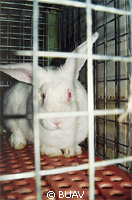
As of 11 September 2004, a ban on testing finished cosmetics products on animals has been in place within the EU. The Directive regulating cosmetics testing also allows for a testing ban on ingredients or combinations of ingredients to come into force as soon as alternative testing methods have become available. In order to be able to draw up a timetable for phasing out some of these tests, the Commission formed a working group involving the Commission services, stakeholder representatives for industry, animal welfare and consumer associations, and the Organisation for Economic Cooperation and Development (OECD). Following a subsequent review of current science in alternatives to animal testing, the European Centre for the Validation of Alternative Methods (ECVAM), published a report assessing the current status and future prospects of various alternatives. For example, the report highlights that 'good progress' has been made towards developing alternative methods for predicting basal cytotoxicity. Several studies have shown that cell cultures, and in particular human cell cultures, could be used instead of animals. The report also identifies eight well-advanced in vitro tests that are capable of predicting basal cytotoxicity. The experts believe that, for some of these, validation and endorsement could be achieved with two to four years. 'However, for replacing the whole animal test, other parameters, such as metabolism, toxicokinetics and toxicity to potentially sensitive target organs, must also be taken into account,' the report adds. A proposal for an Integrated Project - A-Cute-Tox - is receiving funding under the EU's Sixth Framework Programme (FP6). This will be the first attempt to develop a simple in vitro testing strategy for predicting human acute oral systemic toxicity that could totally replace the current animal tests. The report states that the time necessary to achieve complete animal replacement is strongly dependent upon the outcome of this project, but that it is likely to be at least ten years. For skin irritation, ECVAM is currently funding a validation study. If successful, it may result in three validated alternatives, although other aspects such as reversibility and dose-response must be addressed before a full animal test replacement can be introduced. The experts predict that this will not be possible before 2009. The report also addresses eye irritation, skin sensitisation, skin absorption and penetration, subacute and subchronic toxicity, genotoxicity and mutagenicity, uv-induced toxic effects, toxicokinetics and metabolism, carcinogenicity, and reproductive and developmental toxicity. Skin and eye irritation are expected to be the areas in which new alternative testing methods will be available first, as advanced methods are already available for, or undergoing, validation. These are expected to be followed by toxicokinetics and metabolism, which are regarded as a bottleneck for the development of in vitro testing strategies for systemic toxicity. Progress here would lead to further advancement in the areas of acute toxicity, genotoxicity and mutagenicity. The replacement of animal tests is likely to take the longest in the areas of repeated dose toxicity (for example skin sensitisation), subacute and subchronic toxicity, carcinogenicity, and reproductive and developmental toxicity. In general, research and development is ongoing in these areas. 'The necessity to have funds and human resources at the research and development level is one of the major bottlenecks for obtaining alternative methods,' states the report. 'However, good coordination and prioritisation in research and in the optimisation of alternative methods that are able to predict risks to human health, are also crucial,' it adds.