


Europe can still make rapid progress towards Lisbon goals, believes Patten
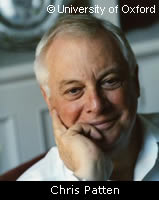
Lord Patten, the former EU Commissioner now chancellor of Oxford and Newcastle universities, has laid the blame for Europe's sluggish competitiveness on under-investment in higher education and research. In a speech to the Academie des Technologies in Paris on 28 February, Lord Patten said the biggest problem id a lack of money from governments and the corporate sector for investments in knowledge - a diagnosis with which the current Commission is in complete agreement. To achieve the 'heroic' objective of making Europe the most competitive knowledge-based economy in the world, he said, 'a number of testing reforms have been proposed, and a number have even been implemented, with some countries doing much better than others. But overall, it is not a very good story.' Lord Patten described it as a paradox that during a period of unparalleled prosperity and stability, Europe has allowed the allocation of public resources given to universities to sag so pitifully. 'Universities are the principle incubators of research. If universities are under valued, what are the prospects for research? We are allowing our culture to wither on the vine,' he said. In tackling the problem of under investment, the former Commissioner believes it will be rather easier to increase public expenditures than stimulate private spending, but if the former is achieved the latter may follow. 'We should also recognise that we start with a huge advantage and could, if we chose to do so, make progress very rapidly,' he added, pointing to Europe's high standard of living and its world-class institutions and companies. 'The Asians have a saying that it is better to join a short queue than a long one. We are in a short queue.' At the European level, Lord Patten welcomes the fact that the Commission understands the nature and scale of the problem, and acknowledged that it is trying to do something about it. Firstly, it has tried to reorient the EU budget towards competitiveness and growth, albeit, he says, without much success. 'The European Council in December produced an outcome that saw the proportion of the European budget devoted to agriculture rise from 40 to 44 per cent between now and 2013; at the same time, the Commission's proposed budget on competitiveness was squeezed hard. Is this because we spent too much on the CAP? Or should we have a higher budget, over the dead bodies of most finance ministers? I leave the answer to you.' Second, and much more successfully, the Commission has launched the European Research Centre (ERC). The aim should be to establish a funding mechanism for frontier research with even less political interference than exists in the US, believes Lord Patten, where scientific research is being assaulted by anti-enlightenment forces. The only major question that remains is the eventual size of the ERC budget, he added. However, it is precisely this factor - the ERC budget - that causes him to question the Commission's third and most recent initiative, the European Institute of Technology, or EIT: '[A]t a time when we know the European research budget is under pressure, what guarantee is there that the money for the new body will not come from what would otherwise be spent through the [ERC]? We do not require one new institution, but much better funding of some of our existing universities and research institutions,' said the university chancellor. The overall challenge, Lord Patten concluded, is about much more than mere GDP growth, it is about our societal values and vitality as a civilisation. 'Civilisations rise and fall. They often bring on, through acts both of omission and commission, their own dark ages. [...] Are we in Europe confronted today with the prospect of a drift into second-rate irrelevance? Maybe not. The issue is in our own hands.'
Countries
United Kingdom