


Forging ICT alliances between European and South East Asia
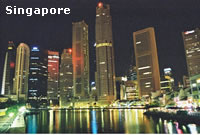
The emergence on the international stage of previously little-known economies in South East Asia has given rise to a new interest in the region within Europe. Equally, as South East Asia looks to benefit from its newfound expertise, it is looking with renewed interest for opportunities and partnerships in Europe. One need only look at the number of joint EU-South East Asia projects in progress to see the interest that exists on both sides. Within the information society technologies (IST) section of the Sixth Framework Programme (FP6) alone, there are 21 projects involving partners from South East Asia. It is this area of cooperation that is to be addressed by the Euro-South East Asia (EUSEA2006) forum, the first event of this kind organised by the European Commission. 'This marks the official start of cooperation between the regions,' EUSEA2006 Event Manager Hilary Hanahoe told CORDIS News. It is to be a high level event, with Information Society and Media Commissioner Viviane Reding opening it, and ministerial representation from the ASEAN countries. The conference is being funded under the BASIC project, funded under the information society technologies (IST) section of the Fifth Framework Programme as an Accompanying Measure. This is the fifth in a series of events, and if previous editions are anything to go by, particularly the Euro-India 2004 event, the 2006 conference will make a significant contribution to EU-South East Asian research collaboration. Indian participation in the EU's framework programmes has almost tripled since the 2004 event, says Ms Hanahoe. Another aim of the forum is to increase the take-up of results and services from Europe in South East Asia. One may assume that the 800 delegates at the conference will be predominantly from Singapore and its more affluent neighbours, with a few attendees from the larger, western European countries. But over 35 per cent of those invited are from Europe, and there is an interest in participating across the continent, including in the Central and Eastern European countries (CEECs). 'Europeans have realised that there is a market out there and it is vibrant and upcoming,' says Ms Hanahoe. Sending someone to Singapore from Europe is obviously an 'investment', as the organisers realise, but Ms Hanahoe is keen to point out that the timing of the event means that there will be a great deal going on to interest European visitors. Over 60,000 people will be in Singapore for ImBX (infocomm, media and business exchange), an umbrella of conferences and exhibitions that is comparable to CeBit in Europe. Participants are also able to well plan their time in Singapore before leaving their office, using the online delegates' showcase. The system allows registered participants to search details of other attendees, and to contact those with whom they would like to meet. 'This is a way of ensuring that the money is well spent,' said Ms Hanahoe. On the Asian side, while there may be more participants from the big three in ASEAN - Malaysia, Singapore and Thailand - EUSEA2006 has contact points in all ten of the ASEAN countries, and hopes that each will be represented, at least at government level. There are also many initiatives intended to attract Europeans and their investment to Asia, which Ms Hanahoe sees as evidence of a desire to collaborate more with Europe. As South East Asia emerges on the competitive stage, it is likely that researchers and policy makers from the region and from Europe will come together on a more regular basis. But for now, as Ms Hanahoe says, this event is 'breaking the ground [...] the first of many in a long partnership.'