


Research suggests link between low level environmental pollutants and cancer
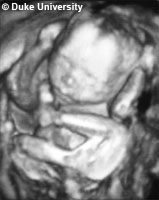
Researchers at the University of Liverpool in the UK have concluded that toxins in everyday items such as plastics, paper and food could have negative effects on unborn children. The team conducted a meta-analysis of biomedical databases in an attempt to explain current rates of cancer. While tests of environmental pollutants, such as organochlorines, have provided inconclusive results, the team considered evidence from those studies alongside animal tests and in-vitro tests. 'Even if healthy adults are not at risk, it would seem that the developing foetus, infant, child and young adults are at risk,' reads the team's report, published in the latest issue of the Journal of Nutritional and Environmental Medicine. The researchers believe that a degree of genetic predisposition, combined with common environmental pollutants, provides a recipe for cancer development in humans. The report states that it is 'the most vulnerable members of society: the developing foetus, the developing child and adolescent and the genetically predisposed, who are at risk of developing cancer following involuntary exposure to environmental contaminants.' 'We are talking about chemicals which could potentially cause cancer in children at parts per billion and parts per trillion levels,' co-author Vyvyan Howard told the Guardian newspaper. The chemicals come from two major areas: food, and paper and plastics. Common pesticides are routinely sprayed onto foods, while the production of paper and plastics yields small quantities of these toxic chemicals. One way to minimise exposure to these chemicals would be to adopt an organic diet. The chemicals can act to disrupt hormone production, which can in turn cause hormone-dependent cancers, such as in the testicular, breast or prostate. Although these chemicals can accumulate in breast milk, the authors were keen to point out that the benefits of breast-feeding still outweigh any risks. The research hints that acceptable levels for pesticides in the environment may be too high. 'This may be an appropriate time for governments to adopt the precautionary principle until substances to which members of society are involuntarily exposed are proved safe from long-term, low-level effects on human health. The World Health Organization estimates that between one and five per cent of malignant disease in developed countries is attributable to environmental factors: it is possible that this figure may be underestimated.'
Countries
United Kingdom