


ESA appeals for amateurs to help analyse SMART-1 impact
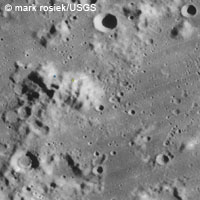
The end of the SMART-1 mission has not been the end of its contribution to science and overall interest in the moon. Almost a week after SMART-1 crashed into the 'lake of excellence' on 3 September, the astronomical world is still abuzz with information gleaned from hundreds of amateur observations of the crash site. 'The successful capture of the SMART-1 impact from Earth raised a substantial interest in the amateur and professional astronomical community. They started to reanalyse the available data, to repeat observations of the impact site and to share the results worldwide as a family,' says Pascale Ehrenfreund, Coordinator of the SMART-1 impact ground observation campaign. The observation was partly coordinated by European Space Agency (ESA), and they want as much information as possible about the crash. 'From the various observations and models, we try to reconstruct the 'movie' of what happened to the spacecraft and to the Moon surface,' says ESA SMART-1 Project scientist Dr Bernard Foing. 'For this lunar 'Crash Scene Investigation', we need all possible Earth witnesses and observational facts,' he said. The precise time of impact seems to be consistent across observers, with the observations from Hobart, Tasmania and the SMART-1's final signal differing by only 0.7 seconds, only a second earlier than the predicted crash time. These differences actually give clues to the Lunar landscape SMART-1 found on impact. ESA now believes that 'the satellite should have hit the Moon in the ascending slope of a mountain about 1.5 kilometres high, above the Lake of Excellence plain,' according to an ESA release. The impact also gave researchers a 'flash', as SMART-1 hit the moon quickly, generating a vigorous explosion. The wavelengths from this flash have been analysed to give some indication of the type of rock SMART-1 found on impact. Moon particles were sent flying some 80 km across the moon surface in the two minutes following impact, observed in an infrared film of the crash, made by Christian Veillet, Principal Investigator for the SMART-1 impact observations at the Canada-France-Hawaii telescope (CFHT). This film has been heavily scrutinised. 'It seems that some ejecta or debris made it across the mountain. This is good news to search for the ejecta blanket,' says Dr Foing. 'We might also see the 'firework' expansion of gas and debris that has bounced after impact from the spacecraft.' For a more detailed analysis, ESA wants input from amateur astronomers. 'We call for observers to search for the crater and ejecta blankets from SMART-1, in particular using visible or infrared imagery, or even to look at spectroscopic anomalies at the impact site,' said Dr Foing. 'We also call all observers to send us their reports, thanking them for engaging in the SMART-1 adventure.'