


From 1957 to FP7
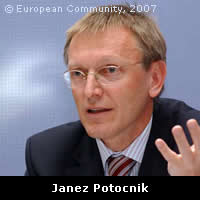
Since the signing of the Treaty of Rome in 1957, Europe has been trying to reduce the barriers dividing its citizens. With the start of the Seventh Framework Programme (FP7), Europe is one step closer to creating a 'United States of Research', EU Science and Research Commissioner Janez Potocnik told participants at Italy's FP7 launch event in Rome on 29 January. A lot of progress has been made since the European Economic Community was established by a treaty signed in Rome 50 years ago. Over that time the EU's internal market has deepened and enlarged, resulting in a better place for European citizens to work and live. However, 'it remains a work in progress', said Mr Potocnik. In addition to trying to remove the remaining obstacles to free trade and free movement, the Commissioner noted that Europe must still ensure the free circulation of knowledge. 'The EU is trying to build a knowledge society. Not just a knowledge economy, but a knowledge society,' he said. An important player in the process of creating a knowledge society is research, said the Commissioner. He underlined the need for Europe to invest more in this area in addition to education and innovation. 'This is not just a nice, modern idea. It is essential to create and preserve jobs,' he argued. The EU has set a target of dedicating 3% of GDP to research and development (R&D) by 2010. 'We are still not close. We need more investment from both the private and public sector,' said the Commissioner. Europe also has to tackle fragmentation of research. 'For too long, we have seen different European countries rushing to set up research centres specialising in the same areas,' said Mr Potocnik. He pointed to the EU research framework programmes, which he said are helping to overcome this fragmentation. 'By getting people, facilities and knowledge together - from across the EU and beyond, we can fight duplication,' he said. The Commissioner concluded by underlining the importance of improving the mobility and working conditions of researchers in Europe. 'I want the barriers dividing researchers from across the EU and beyond to be broken down. I want a 'United States of Research', based in Europe,' he said. A debate on how to make this vision a reality is planned for the coming weeks and months.
Countries
Italy