


Using reference materials to support environmental policies
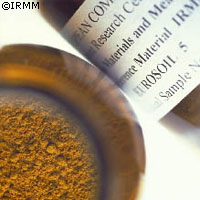
Many environmental laws set out very precisely the maximum amount of a given pollutant allowed in the environment, and ensuring that these limits are not exceeded means environmental monitoring is big business. Given that our health and the health of the environment are at stake, it is important to know that right across Europe, the labs measuring the amounts of these substances in our air, water and soil are doing so accurately. The issue is also important for governments; inaccurate measurements could lead to action being taken unnecessarily, wasting both industry's and tax payers' money. Helping to ensure the accuracy of these measurements is the Joint Research Centre's Institute for Reference Materials and Measurements, which is situated outside Geel in northern Belgium. The IRMM originally started working on reference materials for the nuclear material accounting and safeguards community. However, in the 1970s the JRC realised that there was also a need for environmental reference materials. In the Reference Materials Unit Andrea Held and her team prepare a vast range of certified reference materials, designed to help environmental monitoring labs across Europe verify the accuracy of their own measurements and control their performance over time. 'Certified reference materials are essential,' Dr Held told CORDIS News. Samples available from the IRMM include rainwater whose lead content is known, sediments, soil, sewage sludge, waste materials, plant materials and even dust samples. They also have samples containing organic pollutants. Currently they are focusing their efforts on the Water Framework Directive, which is designed to ensure Europe's water has 'good ecological status' by 2015 and includes a long list of substances to be monitored. Creating reference materials is a laborious process; the samples are made up in huge batches, and it is vital that the last sample taken has exactly the same composition as the first. In the case of a powder reference material, for example, this means ensuring all the particles in the sample are of the same size, while a mixing machine which spins the material around in three dimensions ensures that the final product is homogenised. Over time, the IRMM often finds itself having to create new reference materials to adapt to changing circumstances. For example, it is important that sewage sludge spread on fields does not contain PCBs (polychlorinated biphenyls) or heavy metals. While these were once found at relatively high levels in sewage sludge, it is now hard to find a sample of sewage sludge with enough of these harmful products to be measured. The IRMM has worked on isotopes in the nuclear field for a long time, and now it is starting to apply this expertise to the environmental field as well. It is known that certain natural processes such as evaporation, condensation and oxidation affect the relative abundances of isotopes. Information about isotopes can also help to determine the source of pollution. This is of particular interest in tracing nitrate pollution in waters. Under the EU Nitrate Directive of 1991, EU countries are required to monitor the levels of nitrate in their waters. However, sometimes it is hard to establish where nitrate pollution has come from. The team at the IRMM is also working with policy makers to ensure the need for reference materials is taken into account throughout the legislative process. 'The problem is that it is not evident that to set a limit you also need a reference material so you can compare measurements,' explained Dr Held. Her team is currently working on a project to aid in the measurement of particulates in the air. As the level of particulates is so low, collecting a sample is extremely difficult. According to Dr Held policy makers nowadays are far more aware of these issues.