


EU-funded researchers to tackle food quality and safety genetically
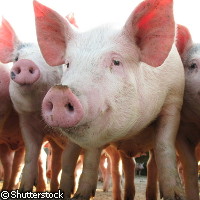
An international EU-funded partnership is leading the way in food quality and safety. Headed by the University of the West of England (UWE) in the UK, the project, which includes eight institutions from seven countries, will study the genetic aspects of food quality to improve safety standards. UWE's Dr Olena Doran, who is leading the research team, said: 'This project is a successful development of a previous EU project on food quality and food safety by UWE which involved 20 organisations from 12 countries. 'We are bringing together international expertise to develop new effective tools and approaches for the improvement of food quality. The partners' experience and facilities will be used to create and develop an international genetics and food quality network which would ensure sustainable international collaboration and long-term training schemes for both young scientists and senior staff.' Called EXCELMEAT, the initiative is a Marie Curie Actions International Research Staff Exchange Scheme, funded under the People Programme of the Seventh Framework Programme (FP7). The project will bring together multidisciplinary expertise from many fields including the UK's Institute of Bio-sensing Technology (IBST), the Centre for Research in Biomedicine, and the Centre for Research in Analytical Materials and Sensor Technology. The project will be split into several Work Packages. The UWE team will lead the Work Package on the development of novel technologies for fast and inexpensive evaluation of the meat quality. Dr Doran explained, 'Quality of food has direct impact on human health and therefore it is one of the top items on the agenda of national and international policymakers and funding bodies. For example, fatty acid composition and fat content in food products are related to the development of cancer, obesity, coronary heart disease and many other pathological states. One way to improve meat quality is selective breeding towards genotypes with desirable traits. This is linked to identification of genes and understanding metabolic pathways controlling the traits. Furthermore, novel technologies are required for rapid and effective assessment of food quality. 'One of the aspects of this project will be improving the quality of pork, which is the most popular meat in Europe; it can be cured and made into the delicacies such as Parma ham in Italy and chorizo in Spain. The impact of our work is far reaching as it is anticipated to influence EU policies related to farm animals/meat production.' Joining the UK team are scientists from the Institute of Food and Technology Research (Spain), Iowa State University (US), the University of Bologna (Italy), the Chinese Academy of Agricultural Sciences, the Ukrainian Academy of Sciences, the Institute for Pig Breeding (Ukraine) and the University of Leuven (Belgium). In addition, scientists at UWE and IBST are researching three different ways to improve food quality: a method of detecting fat partitioning using an impedance technique and a magnetic particle-based method; the development of a 3D (three-dimensional) cell culture system to enable close study of the mechanisms that regulate food quality; and the identification of physiological candidate genes and genetic markers for food quality traits.
Countries
Belgium, Switzerland, Spain, Italy, Ukraine, United Kingdom, United States