


Project highlights need for coherence between energy and development policies
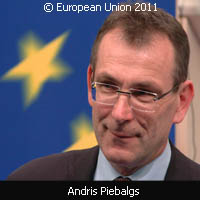
The Lisbon Treaty states that the EU must take development issues into account when implementing other policies that affect developing countries. But to what extent is this happening in the case of the EU's energy security policies? Researchers in the EU-funded EDC2020 ('European development co-operation to 2020') project have been investigating the issue. The project is funded under the 'Socio-economic sciences and humanities' (SSH) Theme of the Seventh Framework Programme (FP7). 'The EU does have a good story to tell - progress has been made. But more needs to be done,' said Richard Youngs of Spanish think tank FRIDE ('Fundación para las Relaciones Internacionales y el Diálogo Exterior'), summing up the project's findings. Professor Youngs was speaking at an EDC2020-organised briefing on coherence between the EU's energy security and development policies held in Brussels, Belgium on 9 February. One man who is well placed to tease out the interlinkages between the EU's energy and development policies is Andris Piebalgs, who delivered the keynote speech at the event. In 2004, he took up the post of European Commissioner for Energy before switching to the Development portfolio in 2009. The Commissioner argued that spending money on energy projects overseas should be seen as an investment. 'It is an energy security issue,' he explained. 'If you increase the energy supply in developing countries, it eases oil supplies.' However, he acknowledged that lessons needed to be learnt from past projects, which were often simply too ambitious. 'We really need a comprehensive strategy based on small-scale projects involving renewable energy,' he said, adding that projects should nevertheless have a strong perspective for the future. 'We should make renewable energy a trademark of European development policy,' he stated. A panel discussion reinforced some of the main findings of the EDC2020 project. For example, the EDC2020 team discovered that energy security and development are more interlinked in Africa than in other energy-rich regions like central Asia, where energy issues tend to be addressed from a geopolitical viewpoint. In a briefing paper, the EDC2020 team laments the fact that while central Asia enjoys 'increasing energy wealth', pockets of poverty remain and human rights standards are low. Panelist and Caspian region expert Jacqueline Hale of the Open Society Foundations in Brussels pointed out that many central Asian states are also developing countries. 'This is often forgotten,' she said, adding that energy security concerns appear to be exacerbating the high levels of authoritarianism found in some of these countries. Supporting this remark was Professor Youngs, who said: 'We believe that the missing link between energy security and development is governance.' EDC2020 research revealed that the approach to governance is still very generic and needs to be tailored more to the energy area. A relatively recent phenomenon in Africa has been the growing numbers of Indian and Chinese projects. Offering an Indian perspective on this was Ruchita Beri of the Institute for Defence Studies and Analyses in India. According to her research, both Indians and Africans alike have the perception that Europeans traditionally view Africa as 'theirs'. While Ms Hale lamented the fact that it often seemed that development policies are made to fit other policies, and not the other way round, Ms Beri felt that it would be unrealistic to exclude national policies from development policies. However, she reassured the audience that 'India is there [Africa] for the long haul'. For its part, the EDC2020 team concludes: 'The EDC2020 project found that EU development and energy policy urgently need coordinating. At present they often work at odds to each other. This will be a major issue in future years, where the EU needs to reform its policies to make a major impact.'For more information, please visit: EDC2020:http://www.edc2020.euEU Science in Society portal:http://ec.europa.eu/research/science-society/
Countries
Belgium