Half of today’s jobs could disappear, but is it all doom and gloom?

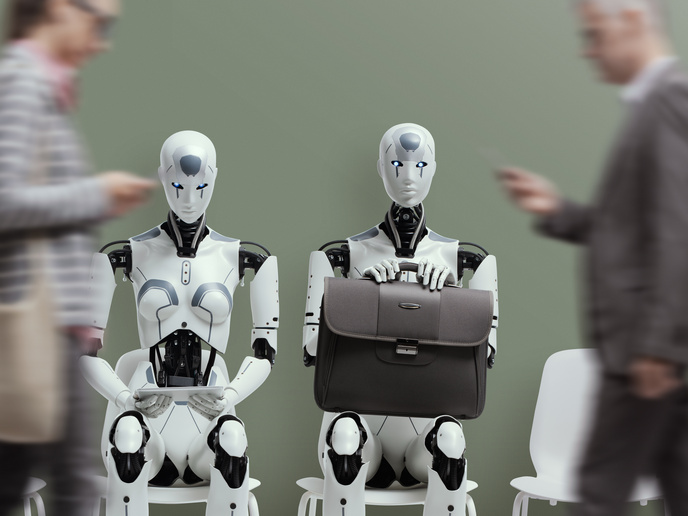
AI is redefining job roles across multiple sectors. Many jobs will vanish in the coming years as AI automates routine and repetitive tasks. Previous research has shown that nearly half of today’s jobs could be wiped out over the next 20 years. However, AI will create new types of jobs that don’t even exist yet. Careers will emerge that require advanced AI skills and knowledge. What are governments around the world doing to prepare their workforces in the era of AI so they don’t get left behind?
The future of work is here
A new study by the University of Georgia (UGA) in the United States reviewed how dozens of countries are coping with the AI revolution, particularly in education and training. The findings were published in the journal ‘Human Resource Development Review’(opens in new window). “AI skills and competencies are very important,” commented study author Lehong Shi, assistant research scientist at UGA’s Mary Frances Early College of Education in a news release(opens in new window). “If you want to be competitive in other areas, it’s very important to prepare employees to work with AI in the future.” The study explored 50 countries’ national AI strategies. It looked into how each country plans to educate people and train workers in acquiring the knowledge needed for AI tools and systems. Six indicators were used to assess how each nation prioritises AI workforce training and education: the plan’s goals, how objectives will be reached, examples of projects, how success will be measured, support structures in place for projects and timelines. Based on this evaluation, countries were grouped into high, medium or low priority for developing a workforce that’s competent in AI-related areas.
Doom and gloom for Europe?
Based on the results, Europe is quickly building AI-ready countries by giving high priority to AI workforce preparation. In fact, 11 of the 13 top performers originated from Europe. According to Shi, the reason for this may be because European countries normally have more training resources at their disposal and cultures of lifelong learning. Two shining examples were Germany and Spain. Germany stressed building a culture that promotes interest in AI, while Spain began teaching children AI-related skills as early as preschool. Australia and Mexico were the other two countries to be ranked high. The United States and 22 other countries placed medium importance on preparing for AI. Almost every country planned to expand AI programmes in tertiary education. Many also had plans to incorporate AI in primary and secondary education. Over half focused on implementing AI for on-the-job training, including formal internships and tailor-made programmes for sectors such as healthcare, finance and manufacturing. Despite all these efforts, the study found that the elderly, unemployed and poorly educated were usually overlooked in national strategies. No matter how committed countries are in developing national AI strategies and future-proofing workplaces, there’s one area that can’t be stressed enough. “Human soft skills, such as creativity, collaboration and communication cannot be replaced by AI,” Shi concluded. “And they were only mentioned by a few countries.”