Uncovering a biomarker of allergen immunotherapy

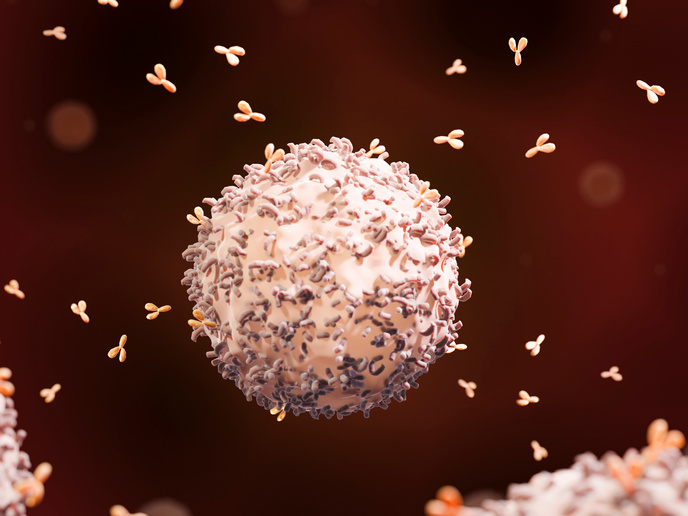
Allergen immunotherapy (AIT) is the only disease-modifying treatment for allergic diseases, yet its mechanisms and predictors of success remain poorly defined. But that could soon change thanks in part to the work of the EU-funded PRE-BIT project. “By uncovering how B cell immunity evolves during therapy, we hoped to advance our understanding of the adaptive immune mechanisms that drive long-term tolerance,” says project coordinator Lina Mayorga, an allergy researcher at the Hospital Universitario de Malaga and IBIMA-Bionand. B cells are a type of white blood cell that play a key role in the adaptive immune system by producing antibodies to fight infections.
Identifying B cell-related biomarkers
PRE-BIT, which received support from the Marie Skłodowska-Curie Actions(opens in new window) programme, looked to identify B cell-related biomarkers associated with successful AIT in house dust mites. Specifically, it focused on characterising B cell phenotypes, isotype switching (IgE, IgG2, IgG4) and repertoire remodelling during treatment. The project saw researchers combine advanced immunophenotyping with transcriptomics, or the study of the complete set of RNA molecules in a cell. The team also integrated longitudinal patient samples both before and after AIT. “These approaches allowed us to define distinct subsets of memory B cells associated with clinical response and tolerance development,” explains Carlos Aranda, a postdoctoral fellow responsible for the project.
New insights into B cells
Whereas previous research showed how memory B cells switch isotypes during immunotherapy, the PRE-BIT project went one step further. It demonstrated that, during AIT, these cells also undergo functional and transcriptional changes towards a regulatory IgG2/4 phenotype. “This finding helps bridge high-resolution immunological profiling with clinical outcomes, demonstrating how advanced omics can elucidate tolerance mechanisms in humans,” remarks Aranda.
Advancing the allergy and immunology fields
By uncovering how B cell immunity evolves during therapy, PRE-BIT contributes to a deeper understanding of the adaptive immune mechanisms that drive long-term tolerance. “Our findings advance the fields of allergy and immunology by providing candidate biomarkers to predict AIT efficacy and guide patient stratification,” concludes Mayorga. “Ultimately, our research will support more personalised, effective and safer immunotherapies for millions of allergy patients worldwide.” Mayorga and Aranda are now co-leading a follow-up study focused on finding whether similar B cell signatures operate in other allergic diseases, such as food allergies.