Fighting soil degradation across the globe

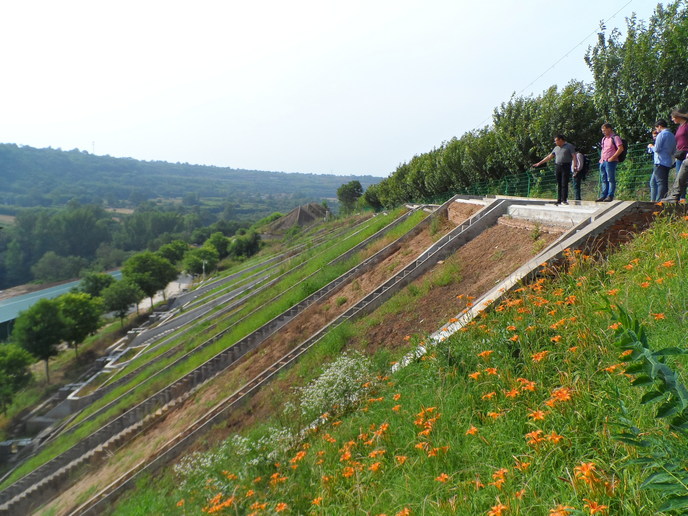
Healthy soils are the basis of our food systems as well as providing us with clean air and water. They also support biodiversity and capture and store atmospheric carbon, thereby mitigating climate change. However, more than 60 % of soils(opens in new window) in the EU are considered to be in an unhealthy state due to unsustainable management practices, pollution, or by being covered over by buildings and infrastructure. Soil degradation therefore represents a major threat to agricultural sustainability and food production across the world. The TUdi(opens in new window) project addressed this challenge by developing tools, strategies and networks for restoring soil health across agricultural land in Europe, China and New Zealand. The aim was to deliver healthy soils for three cropping systems: cereal-based rotations, tree orchards and grasslands. This involved evaluating key soil degradation indicators and providing recommendations on which techniques to implement.
Soil restoration tools
To achieve this goal, researchers developed six mobile friendly, multilingual decision support tools(opens in new window) for tackling soil erosion, compaction, low organic carbon content, poor structure, and loss of biodiversity and fertility. They also created a free socio-economic support digital tool(opens in new window) for determining the financial implications of a given soil restoration technology at farm scale. “This suite of tools will help farmers to implement soil restoration actions and assess the costs and benefits, and appraise both their practical impacts and economic implications,” says project coordinator José Alfonso Gómez Calero of the Spanish National Research Council. The consortium also developed a unified meta-database covering 52 experimental sites and 600 treatments, which is now integrated into the European BonaRes(opens in new window) platform. They included examples of good management and soil restoration practices carried out on commercial farms and in soil degradation studies. The results were used to test the tools developed.
Sharing knowledge
In addition, a catalogue of 27 different soil restoration strategies was created. “This combines a detailed review of available technical and scientific literature, results of the techniques tested in the TUdi meta-database, and tacit knowledge not reported in the literature identified in cooperation with the TUdi stakeholders’ network,” explains Gómez Calero. “A permanent network of stakeholders across the participating countries shared their knowledge to ensure tools and activities met stakeholders’ needs. This network has been expanded through collaboration with existing EIP-AGRI operational groups(opens in new window) and dissemination through the tools provided by the EIP-AGRI within the EU Common Agricultural Policy Network,” Gómez Calero continues. Furthermore, the consortium gathered and analysed socio-economic information from different types of farming across participating countries. Researchers also conducted a cost-benefit analysis and an evaluation of business opportunities for the soil restoring solutions covered in TUdi.
Best advice
According to Gómez Calero: “This information was used to determine the barriers and opportunities for the soil restoration solutions studied under specific conditions, and to provide advice to decision-makers on how to best introduce them.” “The key message is that we need to work with utmost detail on specific problems and agricultural systems hand in hand with a wide range of end users. This should complement technical solutions with a way to scale them up that is socially and economically viable,” Gómez Calero concludes.