How can we clean up space junk?

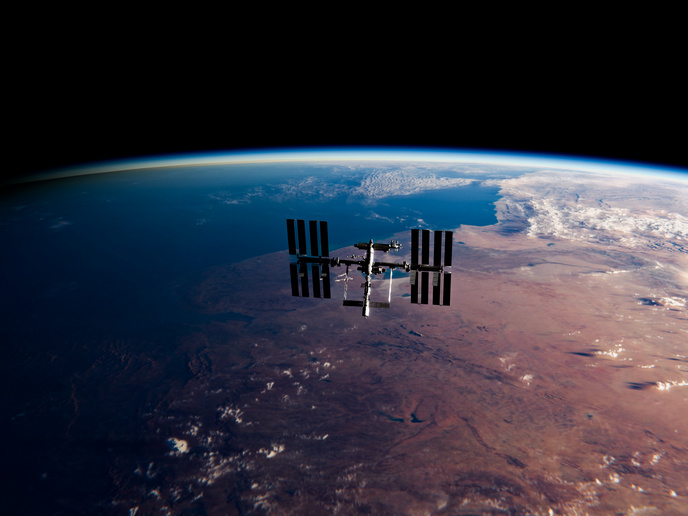
In the 2013 epic ‘Gravity’, a satellite collision in Earth’s orbit sparks a chain reaction, creating a fast-moving debris cloud that destroys everything in its path – including several unfortunate astronauts. The film is a dramatisation of the Kessler Syndrome, a scenario first proposed in 1978 that warned that in a sufficiently crowded near-Earth orbit, a single accident could lead to a cascading series of collisions, causing havoc and rendering Earth orbit unusable. Thankfully it hasn’t happened, but the risk becomes higher as the density of objects in orbit increases. “There are some problems even in the International Space Station, sometimes there are some impacts from small meteorites and small particles and they have to change their orbit,” says Viñals, a project manager at Sener Aerospace(opens in new window). “Minor problems, but it could be worse in the future.” There is a steadily growing collection of junk – old satellite parts, spent rocket stages and even misplaced tools(opens in new window) – orbiting our planet. Estimates suggest roughly 36 000 debris particles larger than 10 cm are hurtling around in low orbit. “This is a very big concern,” remarks Viñals. “It’s a growing problem, with no clear regulations, or dispositions to solve it.” There are some proposals to clean it up, such as using a net(opens in new window) or even firing lasers from the Earth’s surface. But Viñals says a better way would be to get old satellites to return home. “For the future, it would be very positive if each satellite has a device that allows it to perform some kind of de-orbiting and bring it back down to Earth,” he adds. More stringent regulations could make this mandatory for all future satellites.
Orbital mechanics
In the EU-funded ORU-BOAS project, Viñals and his colleagues worked on a different strategy: reducing the number of defunct satellites in orbit by developing in situ servicing. They propose payloads that include batteries, controllers and also de-orbit kits containing hardware such as thrusters and avionics needed to guide satellite parts permanently out of the way. “The idea is in the future to have modular satellites based on Lego construction,” notes Viñals. “You can change a module that is obsolete or doesn’t work properly for a new one.” We are still a long way from standardised modular spacecraft whose parts can be swapped out when necessary – something that would require a mindset shift in how we produce satellites. But in-orbit servicing could come as soon as 2035, notes Viñals. With the number of satellites increasing 10-fold in the last decade, there’ll be no shortage of customers. Read more about Javier Viñals’ research: In-orbit space operations are on the horizon