Agroforestry living labs yield positive results

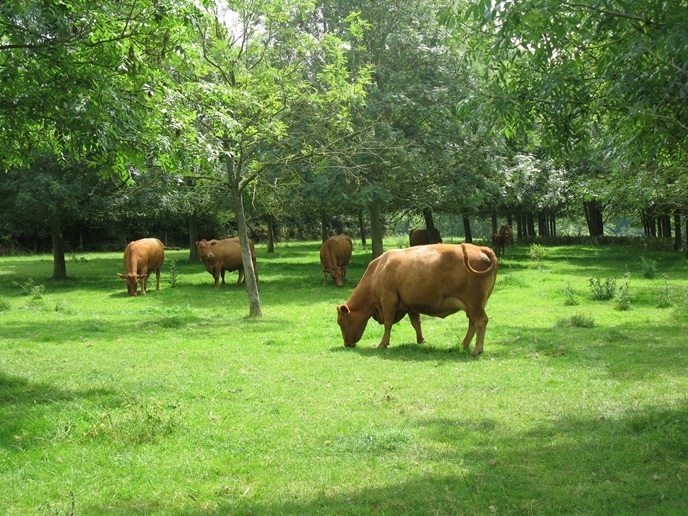
Agroforestry integrates trees with crops or livestock in order to achieve environmental, social and economic benefits. For example, tree roots help bind soil and increase organic matter, which reduces erosion, and promote carbon sequestration. Trees also contribute to biodiversity, providing habitats for wildlife and beneficial insects, and can create new revenue streams for farmers from products such as timber, fruit and nuts.
Need for living labs
One challenge, however, is the fact that trees will not earn an income for farmers until some years after planting. There is also a lack of knowledge about the benefits of tree planting within the agricultural community, as well as a lack of financial support for establishing agroforestry systems and associated business models. The EU-funded REFOREST(opens in new window) project sought to address these barriers by running eight ‘living labs’ and creating an accessible communication platform for farmers. The aim was to gather insights and fill this resource with information, guides and peer-to-peer learning opportunities to make it easier for farmers to apply agroforestry. “We also wanted to explore existing funding models, since public financing is limited and nearly always inflexible,” explains REFOREST project coordinator Martin Lukáč from the Czech University of Life Sciences Prague(opens in new window). “Our aim was to support innovation and business development on the back of proven agroforestry models.”
Applying agroforestry practices
The project brought together farmers, academics and advisors from eight European countries to set up the living labs. “Crucially, each living lab was set up differently,” says Lukáč. “They ranged from an intensively managed university farm to a network of farmers managing tens of thousands of hectares. This gave us the opportunity to explore agroforestry systems in great detail and test the application of new knowledge in real-world settings.” In Bulgaria, for example, farmers wanted to apply agroforestry practices to boost production of organic honey, along with other products. In Spain, meanwhile, the living lab consisted of a network of researchers and agroforestry stakeholders, looking at policy design and its implications. In Germany, farmers applied an agroforestry approach and operated a community-supported agriculture system, while assessing the costs and benefits. “The involvement of farmers and advisors at the beginning was important to set the parameters of our work,” adds Lukáč. “We are able to quickly come up with a short list of ideas to follow up on. A key finding was the importance of establishing living labs based on trust and mutual interest.”
Virtual hub for agroforestry enthusiasts
Each living lab was closely monitored, and the findings were made available on the REFOREST Engagement Platform(opens in new window). The platform is a virtual hub where agroforestry enthusiasts can collaborate, share solutions and help to drive the adoption of sustainable land management practices. “We are now exploring how to scale up these living labs and ensure their sustainability,” notes Lukáč. “We are about to publish robust field-based evidence on agronomic performance, which is important to farmers, and on the ecosystem benefits of agroforestry, which is important to policymakers. We also want to better connect environmental and agronomic benefits to scalable funding models.” The REFOREST project has made an important contribution in moving the standard model of farming from simply being about the delivery of products to one that encompasses societal and environmental benefits. The next step, believes Lukáč, is to ensure that funding mechanisms are put in place to support this transition. “This will help farmers to capitalise on one of the key strengths of agroforestry – the delivery of multiple benefits from the same parcel of land,” he says. “We are now looking to work with policymakers on this issue.”