Building trust to get better value from exports

“The fact that there are gains from trade is no guarantee that everyone involved will benefit,” says SharingGains(opens in new window) project coordinator Rocco Macchiavello(opens in new window), professor at the London School of Economics and Political Science(opens in new window). The SharingGains project was funded by the European Research Council(opens in new window). Increasing the benefits that farmers get from the exports of their produce is not as simple as getting rid of intermediaries, the project found. Several types of market frictions can occur at different stages in the chain. Reducing them through adequate regulations or building trust can increase gains from trade, including a more equitable share for farmers.
Building trust with Rwandan coffee farmers
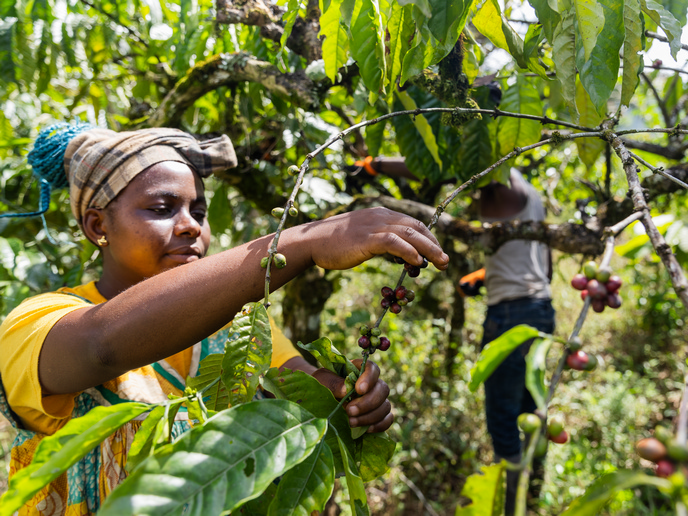
The SharingGains project partnered with East Africa’s largest buyer of coffee, Rwacaf(opens in new window), which sources directly from over 30 000 Rwandan coffee farmers. The research included a randomised control trial to evaluate the effects of trust-building. “Nobody is going to adjudicate a dispute, so the relationship only works if there is trust along the supply chain,” Macchiavello explains. However, it is hard to build and maintain trust, particularly in supply chains involving thousands of smallholder farmers in rural areas. The belief that the other parties will keep their promises requires credible and clearly understood promises between farmers and buyers. The project embedded a ‘clarity-building exercise’ in Rwacaf’s agronomic training on best farming practices and invited all coffee farmers to participate, while specifically encouraging the test group. The scheme was a huge success, according to Macchiavello. It improved transparency and traceability – so identified producers could get fairer prices or other forms of support for their business. Importantly, farmers were also more likely to adopt climate change adaptation techniques.
Modelling regulatory impact in Costa Rica
All sorts of market regulations, such as guaranteed minimum prices for farmers, must be navigated. “But there’s very little rigorous evidence on the impact of these regulations,” he adds. The project developed an innovative model to evaluate regulatory impact – using more than 20 years of data on 40 000 farmers and 200 coffee processors from Costa Rican coffee board ICAFE (Instituto del Café de Costa Rica). “[The model] needs to be sufficiently rich to capture the key ingredients of this agricultural chain, in particular the frictions,” he remarks. “Then you can simulate the effects of changing the regulations.” Farmers are well represented in current regulations in Costa Rica, reaping many of the gains. The simulations found that banning vertical integration between processors and exporters would harm farmers, despite reducing market power of buyers. These often provide them with valuable services, such as loans, insurance and other inputs.
Buyer-driven standards in Colombia
The project also looked at corporate sustainability programmes as an alternative to certification by NGOs such as Fairtrade(opens in new window). “The evidence struggles to show a transformative impact of certification schemes,” he explains. However, the project’s analysis of data from Colombia showed that, for farmers who produce higher quality coffee, some corporate-driven sustainability programmes can generate price premiums compared to certification schemes. Large buyers with more consistent demand can influence intermediaries, leading to higher payments to farmers, the project found.