Leveraging satellite signals and existing telecom infrastructure to improve weather forecasts


Climate change threatens the lives and livelihoods of people around the world. Extreme weather events including storms, floods and heatwaves are on the rise, and there is a growing need for continuous, fine-tuned weather observations. Weather-sensitive industries such as electricity grids, renewable energy, energy trading and defence need accurate and up-to-date information to respond to extreme weather events. The World Bank estimates that weather-affected industries could benefit by roughly EUR 160 billion from improved weather monitoring. With funding from the European Innovation Council(opens in new window) and overseen by the Finnish weather intelligence company Skyfora(opens in new window), the SKYFORA project has introduced a low-cost solution that relies on existing infrastructure to deliver better weather forecasting.
Making the most of satellite signal delay
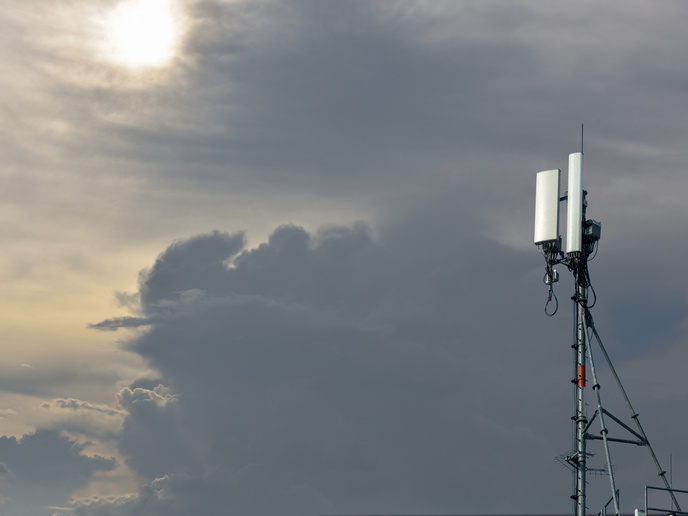
A key component of the SKYFORA solution is analysing signal data from global navigation satellite systems (GNSS)(opens in new window). The main uses for GNSS receivers in telecom infrastructure is network timing and synchronization. With the growing global network of 5G stations, SKYFORA recognised an untapped opportunity to use Telecom GNSS receivers for weather data monitoring and forecasting. “GNSS signals from GPS and Galileo slow down in the atmosphere, and these delays contain high-resolution weather data,” explains project coordinator Fredrik Borgström. “With our patented solution, we capture this new weather data from GNSS receivers already available in millions of cell towers worldwide to provide essential data for optimizing AI weather forecasts.” In this approach, telecommunication towers have the potential to offer a dense, real-time picture of what is happening in the atmosphere. This wealth of data, Borgström shares, is like a ‘superfood’ for AI-driven weather forecasting models.
StreamGNSS antennas complete the digital twin
Complementing its use of signal delay data gathered at telecom stations, the SKYFORA Meteorology approach uses StreamGNSS™ antennas as stand-alone receivers. These are deployed in environments like ports, airports and smart cities, where especially dense observations are desired. While StreamGNSS™ antennas represent hardware development, most of SKYFORA’s innovation involves software updates. The combination of data from telecom stations and stand-alone antennas creates a digital twin of the atmosphere, a robust 3D picture of weather dynamics. “Our innovation lies in turning existing infrastructure into a weather-sensing network,” says Borgström. With the expanding network of telecom towers and the mobility of StreamGNSS™ antennas providing fodder for AI forecasting models, SKYFORA is overcoming key challenges in global weather forecasting: global observation gaps and availability of real-time, high-resolution observations.
Working towards the world’s largest weather-sensing network
With much of the infrastructure already in place and a patented solution, technology is not a problem for SKYFORA. The main challenge comes from a lack of awareness among large telecom operators. As Borgström states: “Many network vendors and operators have not fully realised that their assets can also function as an extensive, high-value weather observation network. Hence, demonstrating the full magnitude of this opportunity is essential.” The project’s proof of concept was carried out with a European telecommunications operator and network provider. This process validated SKYFORA’s solution and underscored how well the system works using existing hardware. The company has completed first pilots and technical feasibility phase and is focused on scaling up technology for broader deployment. SKYFORA’s innovative approach is poised to revolutionise weather forecasting. Set to evolve into the world’s largest weather-sensing network, it has the potential to improve weather monitoring and climate action worldwide.