Community-centred approach to disaster management

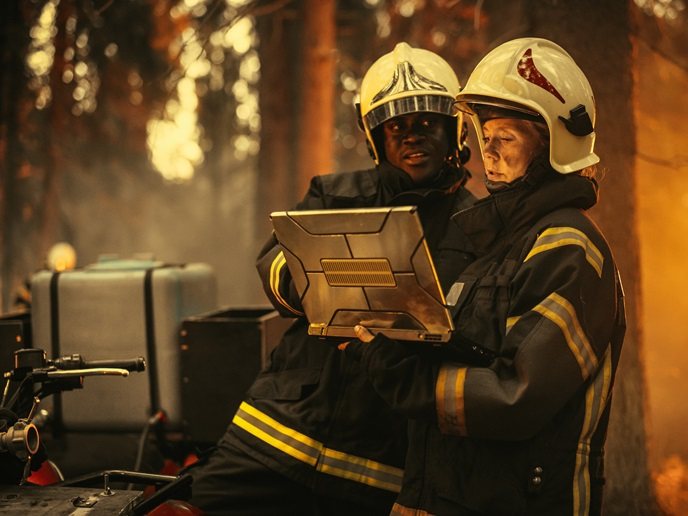
Climate change and rapid urbanisation are exacerbating Europe’s vulnerability to natural hazards such as floods, wildfires and heatwaves. Current disaster management systems are struggling to cope. “Fragmented data, top-down decision-making and limited community involvement all reduce the effectiveness of current systems during complex, multi-hazard events,” explains Cenk Gureken from Sampas(opens in new window), host of the EU-funded C2IMPRESS(opens in new window) project for which he was team leader. To address this, C2IMPRESS has developed and validated tools designed to improve the prediction, planning and management of multi-hazard risks, with a focus on flooding, landslides and wildfires. Technological innovations were guided by a ‘place- and people-centred’ approach that integrated local knowledge and community participation.
Improving prediction, planning and management
A fully operational modularised platform known as the System-of-Systems for Multi-Hazard Risk Intelligence Networks (SoS4MHRIN) is central to C2IMPRESS’s approach. SoS4MHRIN combines Earth system models, such as Copernicus(opens in new window), with artificial intelligence tools, to simulate how natural hazards can interact, cascade or occur simultaneously, sometimes in unforeseen ways. The simulations simplify complex long-term climate trends and short-term extreme events, providing forecasts and insights (for example about impacts on the built environment) at regional to local scales. The platform is currently being accessed by a team at Meteoceanics (its creators), who offer the information as a service to emergency managers, civil protection authorities and policymakers.
Mapping and modelling to evaluate risks
To develop the most appropriate emergency response, SoS4MHRIN links to the cloud-based C2IMPRESS platform(opens in new window). Here, hazard and response simulations can be mapped in real time, with users able to change inputs (such as rainfall levels) and assess the impact. There is also a social media tool that monitors and visualises disaster-related posts. Additionally, a decision support tool (BPM-DSS), powered by big data, was specifically created for local authorities. This is hosted on a secure platform and links to the specific emergency response steps to be followed by each authority. “C2IMPRESS uses mapping and modelling to evaluate risks and predict impacts under various response strategies,” adds Gureken. “The dedicated policy-level decision support system meanwhile supports data-driven disaster management.”
Co-design for effective preparedness, response and mitigation
The C2IMPRESS tools were co-developed through public-private-civic partnerships, citizen science initiatives and Living Labs, with technical teams, potential users and citizens all working together. These collaborations were undertaken through case studies conducted in Greece, Portugal, Spain and Türkiye. Portugal focused on coastal flooding and maritime risks; Greece targeted multiple risks including heatwaves, monitoring climate data cascading impacts and citizen responses; Türkiye concentrated on flooding, placing early warning systems around Ordu, and vulnerability mapping; while Spain (Balearic Islands) emphasised flood and wildfire risk, with simulations informing early warning and resource allocation. Participants tested the tools in workshops and field trials, and on digital platforms. For the HazardMonitor app, first responders across the pilots reported hazards, uploaded geolocated images and took part in operational exercises. This enabled them to validate warning triggers and assess alert notifications. Multi-stakeholder involvement and feedback also benefited human behaviour and agent-based modelling, resulting in simulations of hazard scenarios and mitigation strategies tailored to each pilot. “By involving citizens in co-design, data collection and scenario testing, these technologies not only inform, but empower communities to anticipate, respond to and mitigate hazards,” says Gureken. The forecasting and early warning systems are now fully operational in the pilot sites, providing real-time, actionable alerts. Preliminary cost-benefit analyses have already indicated that they offer substantial socio-economic value. The C2IMPRESS consortium now plans to continue developing guidance, roadmaps and governance frameworks relevant to EU strategies in this field. These include the Disaster-Resilient Society(opens in new window) focus area, and the EU adaptation strategy(opens in new window).