VR helps reveal humans’ self-preservation strategies

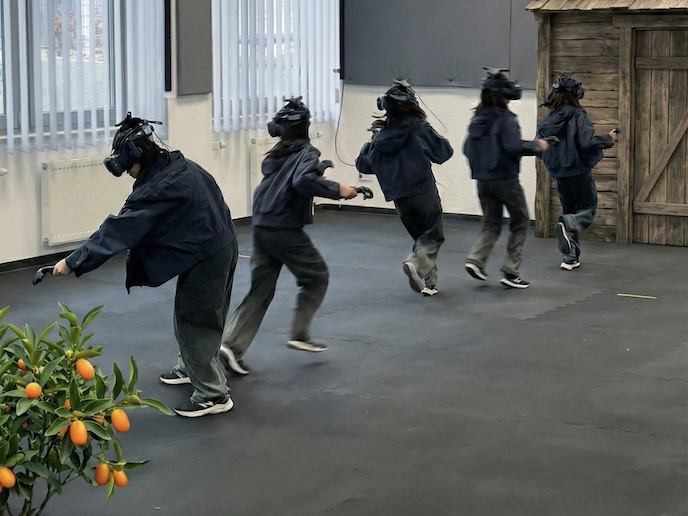
People suffering from anxiety disorders, such as phobias, experience seemingly overwhelming fear in certain triggering circumstances. Avoiding such situations, often objectively harmless, can significantly diminish the quality of sufferers’ lives. It is often assumed that anxiety disorders represent a misguided activation of the body’s healthy defence system, leading researchers to investigate why it gets hijacked by harmless situations. According to Dominik Bach(opens in new window) from the University of Bonn and University College London(opens in new window), there is however an alternative hypothesis: “Perhaps it is the defensive behaviours themselves that are misguided,” notes the coordinator of the EU-funded ActionContraThreat(opens in new window) project. To test this, ActionContraThreat, supported by the European Research Council(opens in new window), set out to first understand what healthy people do in response to objectively harmful situations. Virtual reality (VR) safely simulated such situations, overcoming the ethical and practical concerns previously limiting empirical research.
Novel VR design complemented by brain imaging
According to Bach, there is actually very little knowledge about both what healthy people do when immediately threatened, and the cognitive and neural mechanisms by which that behaviour is planned and coordinated. Indeed much information has been extrapolated from non-humans – mainly mice and rats in laboratory conditions, which, given differences in physiology and biomechanics, might be misleading. ActionContraThreat exposed 280 healthy humans in Germany and the United Kingdom to the VR-simulated threats. “We were interested in threats experienced by our ancestors over many millennia and so responsible for shaping our neural and cognitive mechanisms of defensive behaviour. These included: aggressive humans, predatory animals and even inanimate objects, like falling boulders,” explains Bach. To record both behaviour and the underlying cognitive planning mechanisms, a novel technology combining VR with magnetoencephalography(opens in new window) (non-invasive brain imaging) was developed by the team. “VR headsets emit much stronger magnetic fields than those from the brain so we designed a novel headset from scratch, using low-magnetic components,” adds Bach. A key discovery was the sequence of protective/evasive actions people use. For example, in escape scenarios, the typical sequence is to first face the threat before running away, then again turning towards the threat. In contrast, many animals tend to start by turning away from the threat. Secondly, the cognitive mechanism underpinning this behaviour, dubbed ‘reflective planning’, was further revealed to utilise environmental cues, such as escape routes. “This is somewhat surprising because it was often thought that defensive behaviour is instinctive and hard to change. Evidence is now converging of a ‘pre-planning’ strategy, where individuals continuously conceptualise escape routes even during non-threatening situations, which are then simply adopted,” explains Bach.
Towards better diagnostics and treatments
The team now aim to apply their finding to clinical populations. “We found that even people with subclinical fear of spiders substantially alter behaviour when confronted with non-spider threats – running away faster, keeping more distance from, and looking at the threat less frequently. Knowing how people with clinical fear levels behave could help reveal the root causes of anxiety disorders and phobia, for better diagnosis and treatments,” says Bach. Work is also already under way to develop a diagnostic algorithm based on observable behaviour rather than subjective patient reports, subjectively interpreted by clinicians. “So far, we cannot predict an individual’s behaviour quantitatively, but we have found ways to predict the average behavioural sequence across a group of people,” adds Bach.