



How modular design supports the shift to bio-based composites

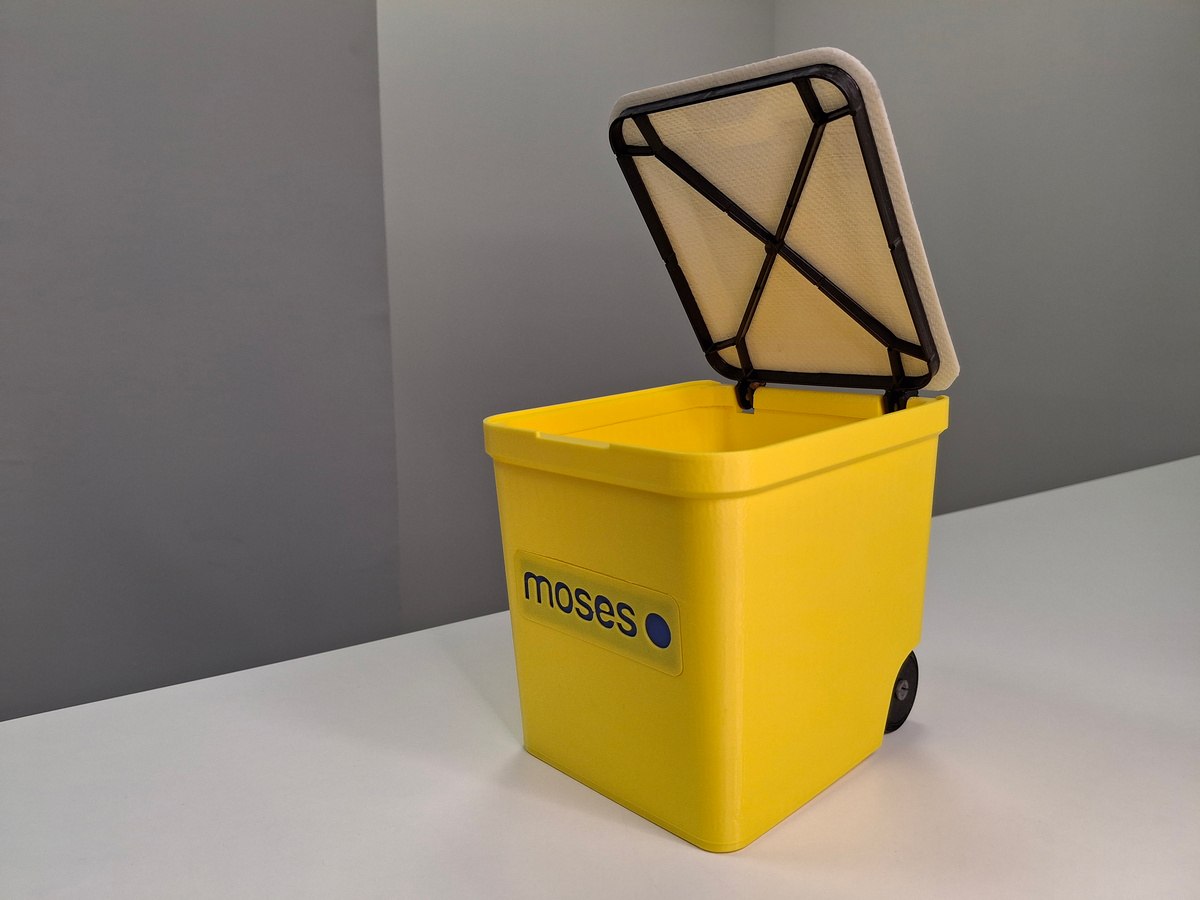
Bioplastics have emerged as strong contenders to replace oil-based materials in a wide range of sectors. But swapping one with the other is not straightforward: their physical and thermochemical properties differ, and a direct substitution can fall short in real-world use. This is why the EU-funded BIO-UPTAKE(opens in new window) project is pursuing a different route – one based on modularity and the strategic combination of bio-based components. The project’s 14 partners(opens in new window) set out to boost the uptake of bio-based composites by 39 %. After three years of research and industrial testing, the project has delivered adaptable manufacturing processes and demonstrator products for construction, medical and packaging applications. Project coordinator Leyre Hernández explains the core idea: “BIO-UPTAKE introduces a modular concept where bio-based composites are transformed into intermediate formats – organosheets, tapes and pellets – that can be combined in multiple ways. This approach enables prefabrication of lightweight, high-performance components with reduced material waste and shorter production cycles.” By applying this modularity, manufacturers can also tailor properties to specific needs while maintaining design flexibility.
Flexible manufacturing routes
BIO-UPTAKE’s combination of different intermediate formats improved mechanical properties, durability and processability. “The union of two materials can amplify each other’s strengths. For instance, organosheets add rigidity, tapes reinforce critical areas and pellets support complex shapes and large parts,” explains Hernández. These formats are the foundation for three manufacturing methods the project has developed. The first is the thermoset composites process, which uses reversible resins and vacuum bagging – removing air for better consolidation – to produce strong, lightweight panels. “These panels are made using prepregs with flax fibres, which enhance sustainability and offer excellent mechanical properties,” she says. The second is a highly customised thermoplastics process that uses self-reinforced tapes and pellets. It enables the production of tailored shapes and properties for small batches, ideal for medical applications. Finally, the one-shot large-volume thermoplastics process combines preforming and injection moulding in a single operation. This speeds up production of large parts like container lids, while reducing energy use and product weight. It also incorporates reversible adhesives to enhance recyclability and disassembly potential. “All three processes integrate real-time monitoring and digital simulation for quality and efficiency,” highlights the project coordinator.
Pilot products with real-world potential
To validate the manufacturing methods, BIO-UPTAKE produced three different pilot products. In the construction sector, it developed lightweight, stiff bathroom ceiling panels that simplify installation and end-of-life recycling. In the medical area, it improved the ergonomics, comfort and sustainability of foot insoles made using the customised thermoplastics process. And in packaging, it manufactured lightweight and recyclable container lids that reduce reliance on fossil-based plastics. “The demonstrators proved that bio-based composites can meet technical and environmental requirements across diverse sectors,” says Hernández. From the start of the project, sustainability was integrated through life-cycle assessment and eco-design principles. Materials were chosen from renewable or recycled sources with low-carbon production methods. All intermediate formats achieved over 75 % bio-based content, and confirmation of greenhouse gas reductions of up to 33 % is underway. “BIO-UPTAKE has delivered three industrial pilots, trained operators on new processes, carried out communication activities and held standardisation workshops, creating a clear pathway for adoption and scaling of bio-based composites,” concludes Hernández.