How food and agro-industrial waste is upcycled into safer packaging, shoes, and textile materials

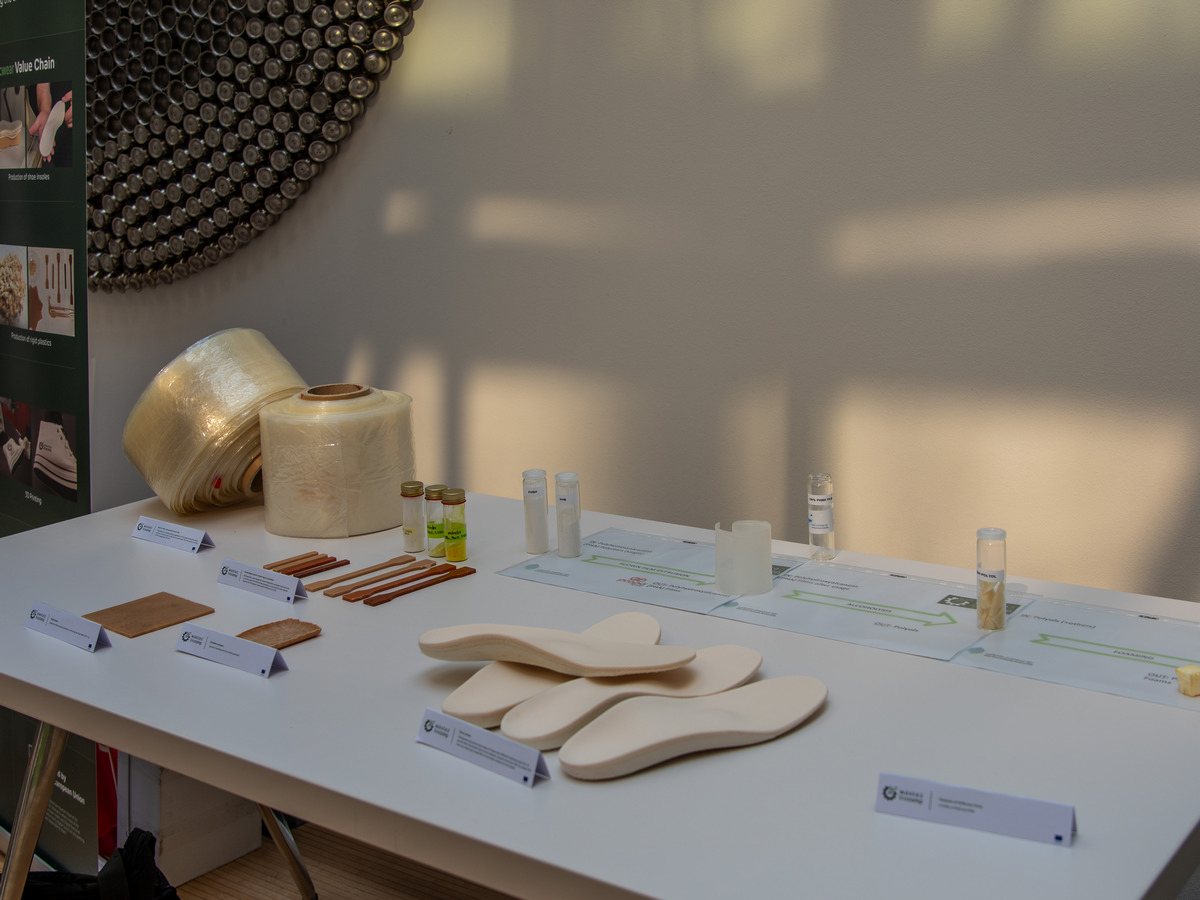
Every year, organic leftovers from food and industrial sources are burned, landfilled or downcycled. Transforming carbon into useful materials sounds straightforward, until you try to create products that look, feel and perform like the ones people already know and trust. The EU-funded Waste2BioComp(opens in new window) project developed bio-based components for three everyday value chains: packaging, footwear and textiles. The work focused on polyhydroxyalkanoates (PHAs), a family of biopolymers produced by microorganisms, and on the manufacturing steps needed to convert them into demonstrators.
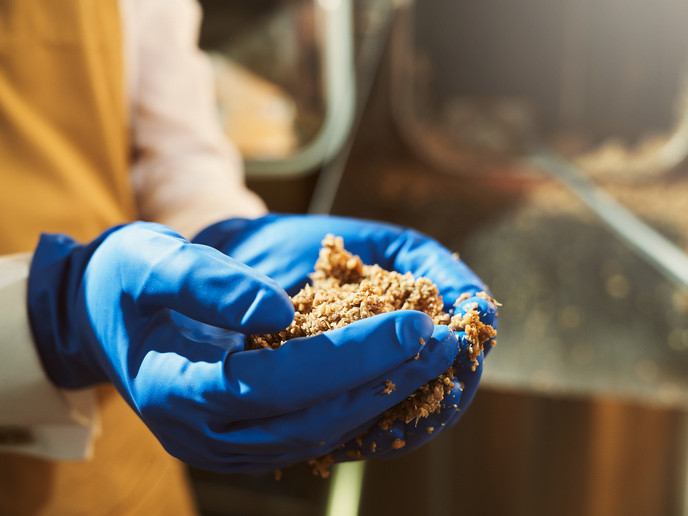
Screening organic waste for high-quality PHA building blocks
Selecting the right waste stream and raw materials determines both material quality and the chances of scaling a process. As project coordinator Helena Vilaça explains, “The primary factor determining whether an organic waste stream is suitable for producing high-quality materials is its chemical composition.” After this initial screen, the consortium assessed yield, product purity and the ease of removing impurities, alongside availability and geographical proximity. Several carbohydrate-rich streams were tested for biogenic PHA production by cyanobacteria, including glycerol, molasses, bread mix, starch, dough base and tobacco. Different bacterial strains responded distinctively to each substrate, producing varying PHA yields and compositions. In parallel, chemical routes were explored using (potentially) bio-based molecules in order to adapt the PHA chemistry and the resulting material properties to the specific requirements of the respective material processing technology. Gregor Grun, professor at the Kaiserslautern University of Applied Sciences, explained, “The resulting PHA materials can be tailor-made and exhibit properties ranging from rigid solids to thermoplastic elastomer (TPE)-like materials. They can be easily processed using a variety of methods (blow moulding, film casting, injection moulding, fibre spinning, 3D printing).
From PHA polymers to packaging, insoles and textile coatings
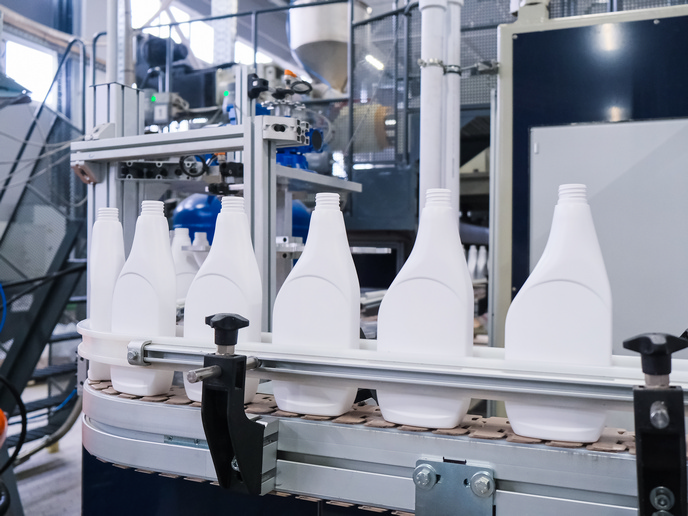
Waste-derived does not have to mean lower quality. Waste2BioComp has benchmarked materials to ensure performance matched or exceeded conventional counterparts and carried out toxicological assessments to confirm safety. When waste streams feed microorganisms or provide chemical precursors, the resulting materials can retain quality because the fundamental building blocks can be identical to those derived from traditional sources, depending on the process implemented. The project translated PHAs and bio-based pigments into application routes. Packaging work produced PHA films and composites with different flexibilities, while footwear work produced foams for shoe components, including PHA insole foams. Textiles were harder, partly because printing and fibre processes tend to tolerate less variation in material properties and process settings. “Among the sectors studied – textiles, footwear and packaging – the textile industry proved the most challenging to integrate the PHAs,” Helena Vilaça explains. Prototypes for shoe components and packaging films that were close to series production could be manufactured, while textiles remained at a lower technology readiness level and require further R&D. Inkjet printing helped bridge materials and end products. The project developed bio-based pigments and inkjet inks and worked on dispersion stability and printhead compatibility, since particle size control is critical. To address the limited light fastness often associated with bio-based pigments, the project used pigments with the same molecular structures as conventional pigments but sourced from renewable sources.
End-of-life barriers and what consumers could notice
Closing the material loop still runs into practical obstacles. Waste2BioComp highlighted five issues: first, highly used composite structures that are hard to separate; second, limited dedicated collection streams for emerging materials; third, weak consumer guidance on disposal routes; fourth, additives that hinder recyclate purity; and fifth, a high diversity of bio-based polymers requiring specific recycling pathways. If Waste2BioComp materials reached the market, consumers could notice changes beyond lower fossil input. As Helena Vilaça concludes, “Beyond environmental advantages, consumers would experience several practical benefits if Waste2BioComp products reached the market. These include safer, less toxic materials, since PHA-based plastics, whether rigid or flexible, do not require harmful plasticisers, and improved skin compatibility, as confirmed by non-sensitisation results for PHA insoles and printed textiles.”