Measuring real-world human interactions

Most social interactions unfold through coordinated movements in real time and real space. However, research into the neural and physiological processes underlying social behaviour has long been constrained by laboratory-restricted technology and limited analytical tools.
EEG on the move
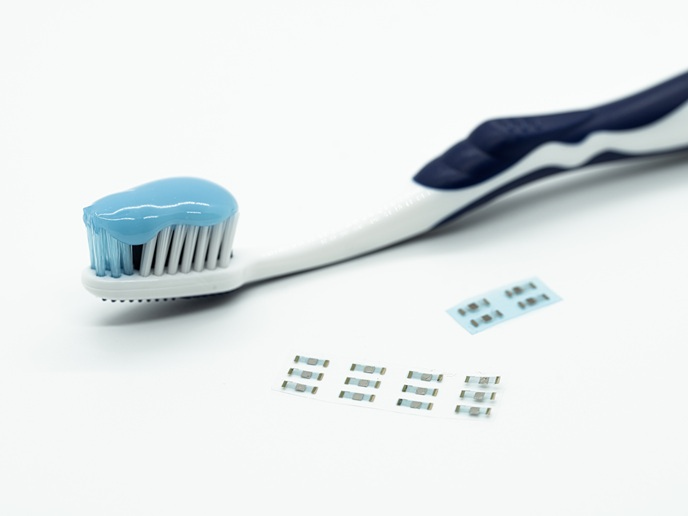
Undertaken with the support of the Marie Skłodowska-Curie Actions programme, the EMBRACE(opens in new window) project set out to develop a mobile electroencephalogram (EEG) system that can study how people interact as they move. The consortium involved an interdisciplinary team of biomedical engineers, computer scientists, neuroscientists and psychologists who worked closely with commercial partners to achieve the project goals. Unlike traditional gel-based EEG systems, the EMBRACE solution incorporates dry flower electrodes(opens in new window), named because of their petal-like arrangement. These electrodes have been engineered to maintain signal quality and comfort during experiments lasting up to three hours. The flexible pins improve hair penetration and increase the electrode skin contact area, reducing impedance and enhancing signal stability. The pin arrangement distributes pressure evenly, improving wearing comfort. Alongside novel materials that enhance mechanical durability and long-term performance, these features enable deliver brain monitoring during movement-intensive tasks. “These innovations opened the door to studying human interactions in a far more natural way than was previously possible, enhancing social neuroscience,” states project coordinator Silvia Comani.
Synchronisation with other devices
A central innovation of EMBRACE was the ability to synchronise multiple independent recording systems in real time. The team simultaneously captured brain activity, heart and lung signals, muscle activity and full-body kinematics from two interacting participants. In total, ten streams of neural, physiological and movement data(opens in new window) were recorded and aligned with high temporal precision. To achieve this, the team reduced the number of synchronised devices through meaningful grouping. Devices were connected through a centralised control unit, which allowed wireless data distribution, continuous monitoring and alignment. “To our knowledge, we were the first to develop such a complex multimodal setup,” highlights Comani.
Studying social interaction in real time
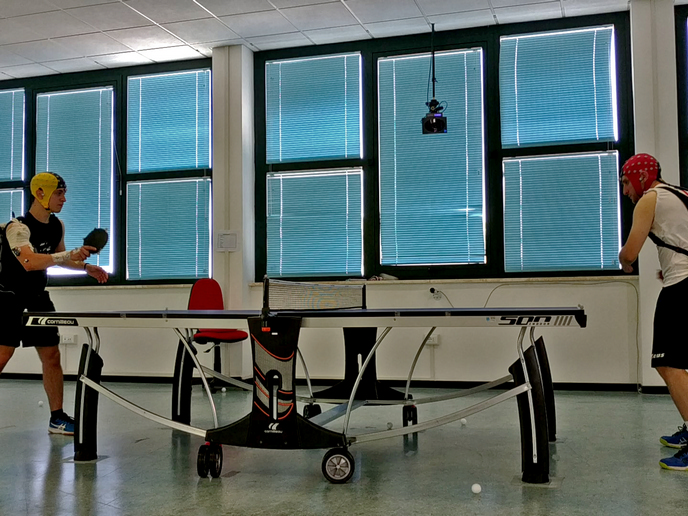
The new technologies were validated in real-time, face-to-face experiments(opens in new window). Participants engaged in cooperative and competitive tasks such as table tennis, allowing researchers to observe coordination as it naturally unfolds between two individuals. According to Comani: “When studying the social brain, the fundamental unit of analysis should be the dyad or group involved in the interaction.” The project recorded multimodal data from 36 dyads, generating a unique open-access dataset. The ongoing analysis of this information will provide important neural, cognitive, behavioural and social insight into real-world behaviour. Artificial intelligence approaches will also help delineate the mechanisms underpinning social interaction.
Future steps and applications
By enabling wireless, high-resolution recording of brain and body signals during real interactions, EMBRACE has taken a significant step towards studying the social brain in motion rather than in isolation. At the same time, its strongly collaborative framework has reinforced research capacity and established a lasting European network linking academia and industry. Immediate application fields include intelligent prostheses, brain-computer interfaces and sports neuroscience. Further technological refinements are expected to expand the range of potential uses of the EMBRACE system.