AI just needs a little of that human touch

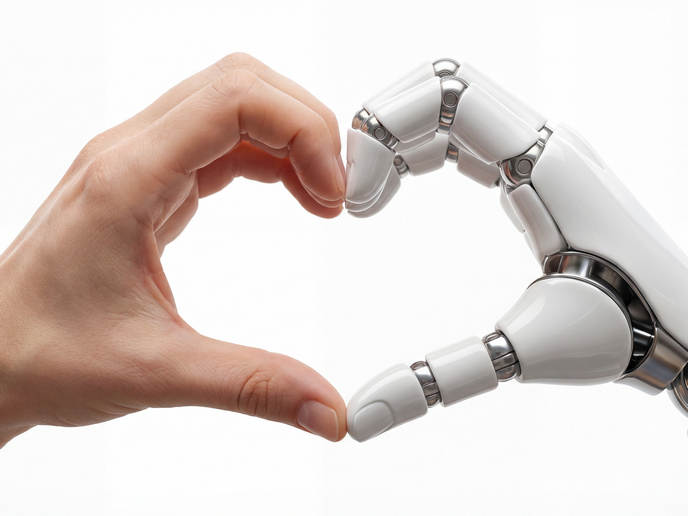
Most machine learning (ML) models are designed to autonomously make decisions based on passively collected data. In this sense, they are seen as a means of replacing humans in certain tasks. But does this approach reflect reality? According to Manuel Gomez Rodriguez, a researcher at the Max Planck Institute for Software Systems(opens in new window), the answer is ‘no’. “In most social, information and cyber-physical systems, algorithmic and human decisions feed on and influence each other,” he says. That being the case, Gomez Rodriguez argues that ML models need to better reflect this interdependent relationship. In other words, what these models and algorithms need is just a little of that human touch. Adding that touch is the EU-funded HumanML(opens in new window) project.
Human-centric machine learning models
The project, which received support from the European Research Council(opens in new window) (ERC), developed human-centric ML models and algorithms capable of evaluating, supporting and enhancing the decision-making process. “We wanted our models and algorithms to account for the feedback loop between algorithmic and human decisions and learn to operate under different levels of automation,” explains Gomez Rodriguez, the project’s principal investigator. Researchers also designed models that could both anticipate how humans would react to their algorithmic decisions and provide actionable insights on how they reached those decisions.
Even when one is artificial, two heads are better than one
With this blueprint in hand, the project developed the very first ML algorithm designed specifically to support human-AI decision-making. It also conducted several large human-subject studies that demonstrated the effectiveness of its human-centric ML models – an important step that is often overlooked by the ML community. “They say two heads are better than one, and our models essentially work as an additional head, supporting the human decision-making process and, ultimately, delivering a decision that exceeds what could be achieved by a human or algorithm acting alone,” remarks Gomez Rodriguez.
Positioning AI as a decision support solution
By shifting the focus from how AI will replace humans to how it can support us, the HumanML project fundamentally changes the way ML models and algorithms are evaluated. “This change in perspective minimises the potential harm, risks and burdens that machine learning systems could have on the public and instead maximises their societal benefits, particularly in the context of decision support,” concludes Gomez Rodriguez. The project’s work has been presented at flagship conferences and published in leading trade publications. It also received a best paper award at a workshop on AI & HCI(opens in new window), part of the International Conference on Machine Learning 2023(opens in new window). Building on the results achieved during the HumanML project, Gomez Rodriguez is now using an ERC Consolidator Grant(opens in new window) to study the role of counterfactuals in the minds of machines.