Generating new products from wastewater

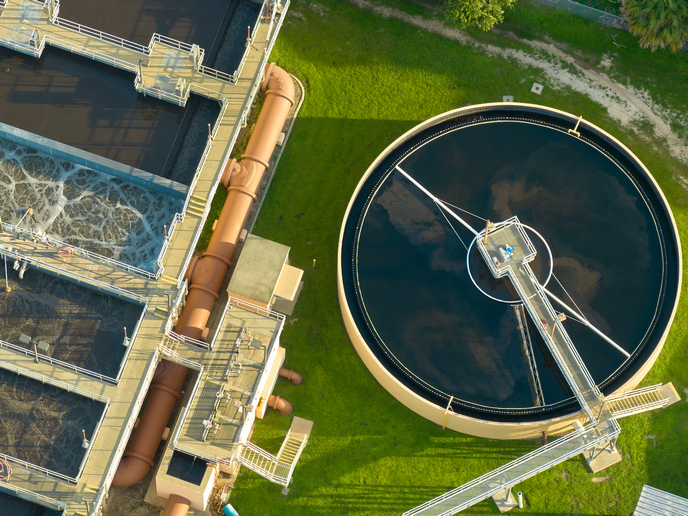
There is a lot of waste in our waste. Wastewater treatment has advanced significantly over the years, helping us to mitigate environmental harm and make the industry more sustainable. Yet the recovery of resources from waste is still limited. “The issue is not the lack of technology but the sum of several factors,” says David Gabriel Buguña from the Autonomous University of Barcelona. “RECYCLES demonstrates that effective biological and digital solutions already exist, several of which have been validated at pilot scale. The real obstacles are related to the maturity of technologies as well as economic, regulatory and organisational factors,” he explains. In the RECYCLES(opens in new window) project, with the support of the Marie Skłodowska-Curie Actions(opens in new window) programme, Buguña and his colleagues developed new bioreactor technologies that harness carbon, nitrogen and sulfur cycles and recover products from liquid and gaseous waste.
Developing new bioreactor configurations
In the lab, the RECYCLES team developed and tested several innovative systems, beginning with reactors able to remove sulfur and nitrogen (with over 90 % nitrate removal and nearly complete sulfide oxidation). In parallel, the researchers designed a granular sludge sequencing batch reactor (SBR) to perform partial nitrification, selectively enriching ammonia-oxidising bacteria and achieving nitrite accumulation ratios above 70 %. A third bioreactor line investigated the production of polyhydroxyalkanoates (PHAs), precursors of bioplastics. SBRs were able to extract up to 82 % of intracellular polymer contents, demonstrating their ability to feasibly recover high-value products from wastewater. “To support and interpret these bioreactor developments, we applied advanced microbial monitoring and molecular biology tools, including metabarcoding, and full-genome sequencing,” notes Buguña. This let the researchers link reactor performance with microbial ecology and eventually design and evaluate full treatment plans for two real industrial case studies. The results were translated from the lab into a pilot-scale demonstration at the Cuoiodepur wastewater treatment plant in Tuscany, combining anaerobic digestion with biogas desulfurisation. “This system, operated for several months under real conditions, validates the feasibility of one of RECYCLES’ novel resource-recovery bioreactor concepts in industrial environments,” remarks Buguña.
Decision support with advanced technologies
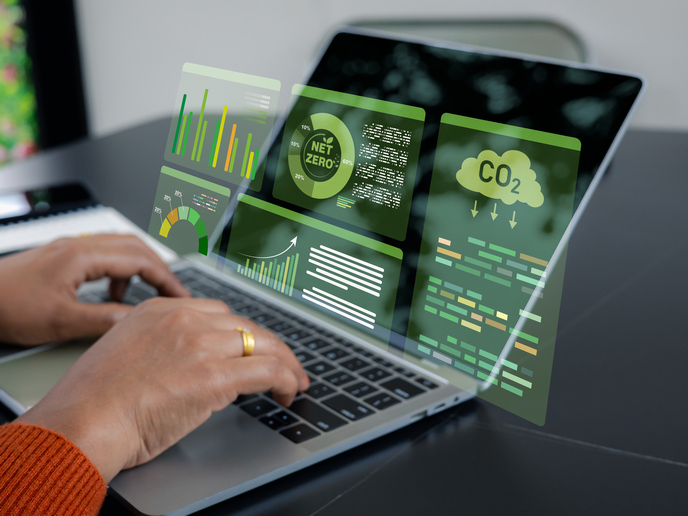
The RECYCLES project delivered several important results, but two outcomes stand out for their potential impact in the near future, notes Buguña. The first is a decision support tool (DST), which integrates plant-wide process modelling, life-cycle environmental assessment, life-cycle costing and multi-criteria decision-making into a single, transparent framework. “This tool was fully developed, validated and applied to real industrial case studies, allowing complex treatment configurations to be compared on technical, environmental and economic grounds,” adds Buguña. The second major highlight is the pilot-scale demonstration of an anoxic bioscrubber, which was able to almost completely remove hydrogen sulfide from biogas to upgrade its potential. “Together, the DST and the anoxic bioscrubber illustrate RECYCLES’ dual contribution: a digital tool that guides optimal design and decision-making for industry, and a validated, scalable biotechnological solution that closes material cycles and supports the shift towards circular-economy treatment trains,” explains Buguña.
Helping Europe move towards a more circular economy
The project’s results support Europe’s transition to a more circular economy by demonstrating how biological processes can transform waste streams into valuable resources while reducing reliance on chemicals and energy-intensive treatments. “Several partners are already exploring follow-up projects and industrial collaborations, indicating a clear pathway towards implementation and further scale-up in the near future,” Buguña says.