Could we implant memories?

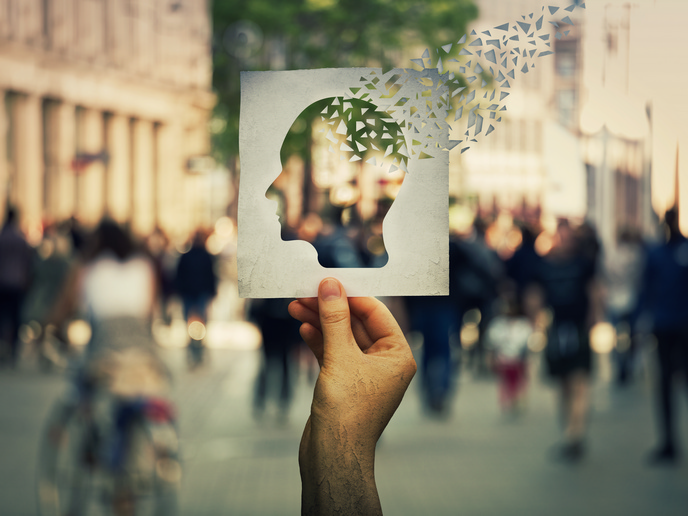
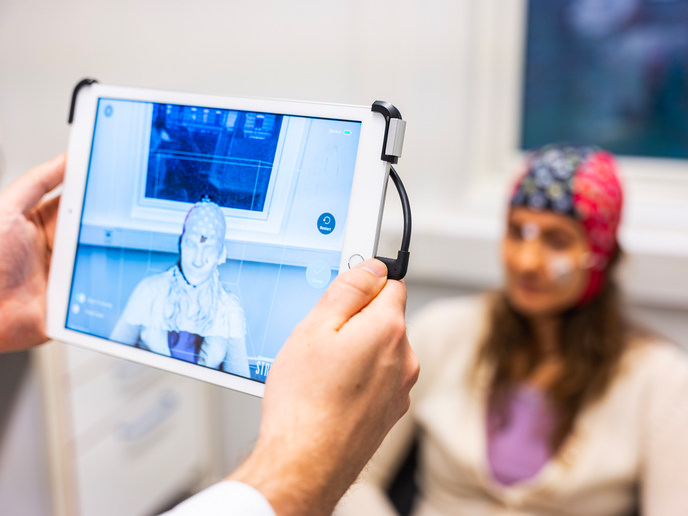
When it comes to Hollywood neuroscience, “there are things that are indeed not unrealistic,” says Soekadar. But while in theory implanting a memory may be feasible, it would be incredibly complex to do, he adds. Firstly, memories are not stored away in some mental filing cabinet, they are reconstructed as you recall them and are slightly different each time. Recall depends on the context in which you are doing it, as you essentially rewrite the memory from scratch, says Soekadar, Einstein professor of Clinical Neurotechnology at Charité, University Medicine Berlin(opens in new window). “It’s not the original memory. It feels like the original one, but it’s not.” And every brain is wired differently, with complex neural architectures that evolve over time. This means you would need some sort of generalised model that can generate memories in people with very different brains. “It’s not only that the topography of the brain has to be activated at a certain time point,” notes Soekadar. “It has to be over a longer time span in order to modulate the brain dynamics.” This also depends on the external context, making the whole process even more complex. If it was a memory of a behaviour, such as riding a bicycle, the person receiving it would still have to rehearse the action, too: there’s a difference between understanding the concept of riding a bike and doing it. And work carried out with professional athletes suggests that every time they kick a ball, there’s a tiny deviation in brain activity, making any potential memory transfer even more unpredictable. In the NGBMI(opens in new window) project, which was funded by the European Research Council(opens in new window), Soekadar and his colleagues worked with brain/neural-machine interfaces (B/NMIs). These can help patients with conditions such as paralysis or stroke to recover their movement, communication and cognitive function. The NGBMI project successfully developed an innovative new mobile system that combines these interfaces with transcranial electric stimulation. This allows real-time adaptive stimulation based on individual brain activity, and was trialled in patients with neuropsychiatric and neurological disorders to improve impaired motor or cognitive function. Even without advanced technology, memories can be implanted – in a sense. In a 2006 study(opens in new window), researchers queried participants about their actions two weeks earlier. This included bizarre questions such as if they remembered proposing to a vending machine. Some had false memories of doing so, inspired purely by their imaginations. “The mind can do so many things,” adds Soekadar. “It’s just very fluent.” Something to keep in mind – your own or someone else’s. Read more about Surjo Soekadar’s research: Adaptive neurotech aims to restore body and brain functions