First commercial space science satellite starts a new era in astronomy

Stellar flares can dramatically alter the atmospheres of orbiting exoplanets, potentially affecting their ability to support life. Observing these phenomena, particularly in ultraviolet light, is essential for understanding their impact. However, Earth’s atmosphere absorbs ultraviolet light, making ground-based observations impossible.
Expanding access to the ultraviolet region
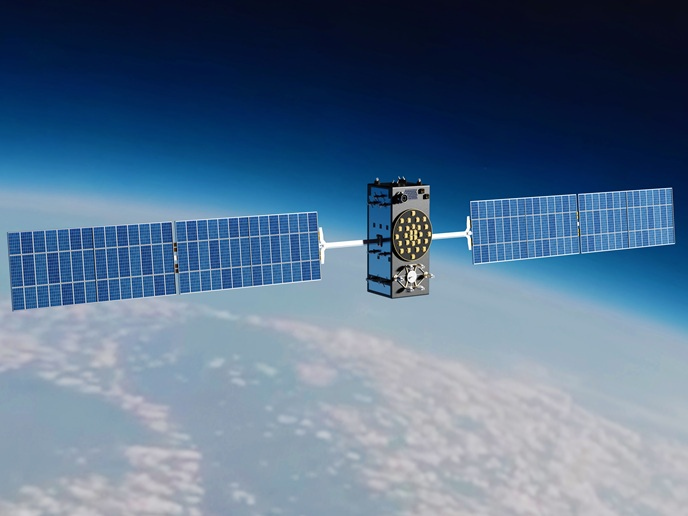
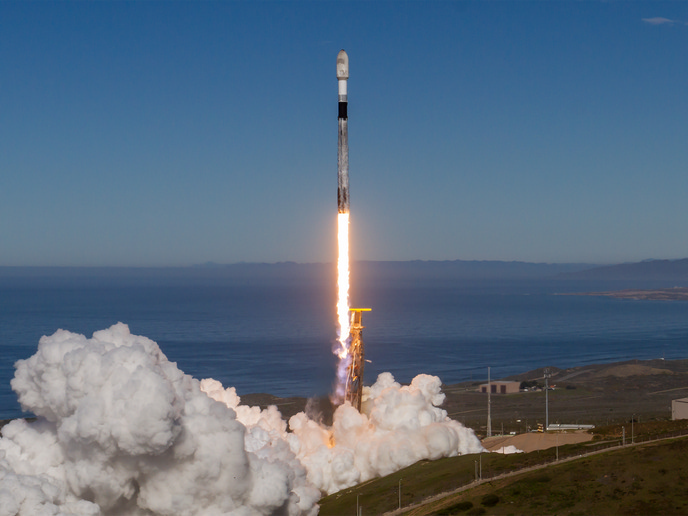
Space telescopes including Hubble and the James Webb Space Telescope offer some capabilities in the ultraviolet spectrum, but their availability is limited owing to their high demand and their focus on a wide range of astronomical objectives. The EU-funded MAUVE(opens in new window) project unveiled for the first time a small satellite, Mauve – a 16U CubeSat with a 13-cm telescope designed to monitor star magnetic activity and address the lack of ultraviolet data. “Mauve was launched in November 2025 aboard SpaceX’s Transporter-15, entering a sun-synchronous low Earth orbit at approximately 510-km altitude. It captured the first light in February 2026, observing Eta Ursae Majoris(opens in new window) in a 5-second exposure,” notes project coordinator and Blue Skies Space CEO, Dr Marcell Tessenyi. The spectrum closely matched archival Hubble STIS data of the same star, a promising validation of the instrument’s performance. “Providing long-term ultraviolet observations of stars, Mauve will allow scientists to track stellar activity changes over weeks, months or even years,” explains Dr Tessenyi. This mission addresses critical gaps in astronomy, particularly in time-domain studies that reveal how stellar behaviour evolves over time. “Mauve is designed to monitor phenomena such as magnetic activity, flares and transient emissions, offering insights into the dynamic processes that static observations cannot capture,” adds Dr Tessenyi.
Smart design advancing satellite capabilities
The mission’s success is underpinned by several novel technologies developed specifically for its CubeSat platform. For instance, its electrical power supply ensures resilience by doubling battery cells and reducing the maximum bus voltage, allowing the satellite to continue operating even in the event of a cell failure. Furthermore, the intelligent payload controller serves as a robust interface between the platform and its payload, enhancing reliability and reusability for future missions. The platform also features an advanced attitude determination and control system that integrates gyro technology and payload data to achieve ultra-precise pointing accuracy, critical for capturing high-quality observations of distant stars. The payload itself features a 13-cm telescope connected to redundant spectrometers via optical fibres. Mauve’s design philosophy emphasises the use of modified commercial off-the-shelf components, such as a telescope adapted from an intersatellite laser communication system. This balances cost and performance, enabling agile mission development without overengineering.
Small satellites, big potential for exploration
Mauve progressed from technology readiness level (TRL) 3 to TRL 6 within the project timeline, demonstrating its capability to deliver high-quality science data. The mission demonstrated that small CubeSats can effectively perform spectrophotometry of bright targets without requiring large mirrors, cryogenic detectors or thermal stray-light suppression. “This achievement sets a precedent for the development of low-cost, rapidly deployable scientific satellites, proving that meaningful astronomy can be conducted from small satellites built rapidly and at a low cost,” highlights Dr Tessenyi. Blue Skies Space, the organisation behind Mauve, is already planning other ambitious projects, including the Twinkle mission(opens in new window) for exoplanet studies and a fleet of satellites(opens in new window) around the Moon to explore radio signals from the cosmic dark ages.