Rewiring photorespiration could boost crop productivity

Plants use photosynthesis to convert sunlight and CO2 into sugars and biomass. The key enzyme involved – Rubisco – can react with oxygen instead of CO2, triggering a wasteful process called photorespiration. It consumes energy and releases previously fixed CO2 back into the atmosphere. This can substantially reduce photosynthetic efficiency and crop productivity, particularly in hot, dry climates. The EU-funded GAIN4CROPS(opens in new window) project set out to redesign this inefficient process. It explored both naturally evolved and synthetic strategies to reduce carbon loss, creating more efficient ‘carbon pumps’ and synthetic metabolic pathways. These strategies could improve crop productivity and resource-use efficiency while supporting more sustainable agriculture.
Experimental and theoretical tools yield proof-of-concept breakthroughs
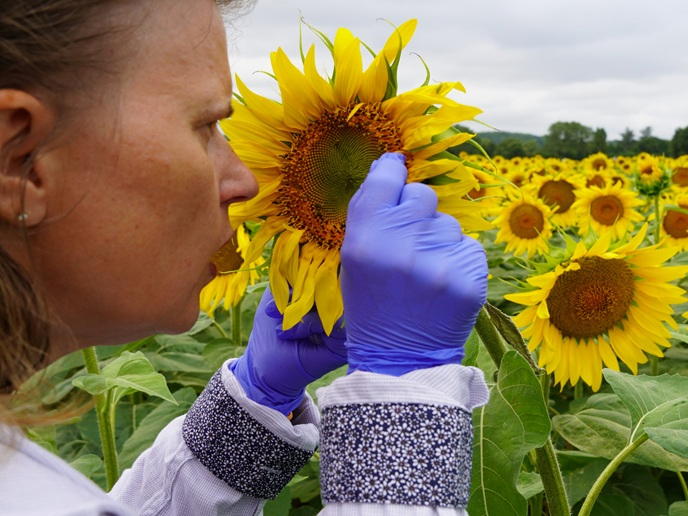
Most plants, including all trees, are so-called C3 plants without the ability to mitigate photorespiration. C4 plants, more common in hot habitats, have pathways to minimise it. The GAIN4CROPS project chose to study the sunflower, an economically important European crop for food, feed and oil production. Crucially, while typically a C3 plant, some wild relatives are C3-C4 intermediates, providing valuable clues about how evolution has addressed the photorespiration problem. Combining genomics, synthetic biology and metabolic engineering, the project developed synthetic photorespiration bypasses that reduce carbon loss and successfully introduced some into the model plant Arabidopsis. “They improved growth and biomass accumulation, a breakthrough proof of concept demonstrating that redesigning core metabolic processes is biologically feasible,” explains project coordinator Andreas Weber of Heinrich Heine University Düsseldorf(opens in new window). The project also generated extensive single-cell and single-nucleus genomic and transcriptomic datasets from sunflower relatives and C3-C4 intermediates – among the many resources produced on a larger scale than originally anticipated. These provided unprecedented insight into the genetic control and spatial organisation of photosynthesis. “Computational models simulate photosynthetic carbon metabolism and predict how engineered pathways behave inside plant cells. These frameworks allow researchers to evaluate new strategies and compare pathway efficiencies before performing time-consuming experiments. This makes pathway design more predictive, scalable and efficient,” notes Weber.
Challenges transferring crop transformation science to practice
While GAIN4CROPS demonstrated the significant potential of crop transformation to boost crop productivity, “it also highlighted the technical difficulty and time required to translate scientific discoveries into real agricultural applications. More shared and accessible crop transformation facilities are urgently needed across Europe,” Weber adds. A joint webinar(opens in new window) with EU-SAGE (European sustainable agriculture through genome editing) and Reimagine Europa addressed new genomic techniques, photosynthetic engineering and regulatory uncertainties. Discussions focused on the need for science-based, proportionate regulation to support responsible translation of plant science into practice.
Crop transformation as a key enabler of crop productivity
“Crops that lose less carbon through photorespiration could produce higher yields while using water, nutrients and land more efficiently. This could help agriculture adapt to climate change while reducing environmental pressures,” notes Weber. However, moving the field from isolated proof-of-concept experiments towards a genuinely scalable and translational approach to crop engineering will require a multidisciplinary approach. The GAIN4CROPS project showed what is possible when this is implemented. Beyond sunflower, the tools, datasets and engineering strategies developed in GAIN4CROPS can support broader efforts to improve major food and bioenergy crops worldwide.