What keeps farmers locked into unsustainable practices

Researchers have developed innovations from nature-based solutions to advanced technologies that could reduce the impact of farming on the environment. However, progress towards sustainability remains slow despite years of EU efforts, including its Farm to Fork strategy and more recently its Vision for Agriculture and Food. Indicators of sustainable farming in Europe such as water-use efficiency(opens in new window) and organic farming adoption(opens in new window) are improving, while biodiversity and water quality(opens in new window) (nitrates and pollution) have stagnated or regressed. In addition, agricultural greenhouse gas emissions(opens in new window) are declining too slowly. The EU-funded ENFASYS(opens in new window) project set out to understand why and identified strategies for accelerating the shift to more sustainable farming systems. It investigated the systemic and behavioural lock-ins – the structural barriers and habitual practices that keep farmers tied to unsustainable production – and developed design principles to help policymakers overcome them. The consortium shared its findings through publications, policy briefs, podcast and webinar series, an online course, a summer school and a joint high-level event in Brussels with sister project VISIONARY.
Widespread lock-ins slow the agricultural transition
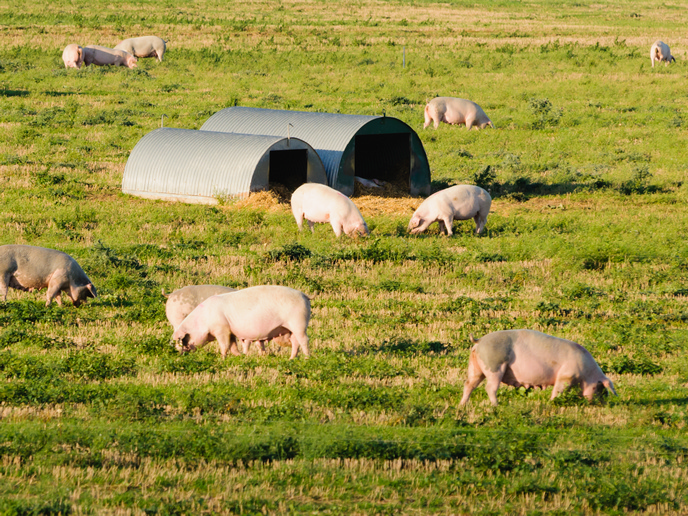
The project distinguished between barriers – specific obstacles – and lock-ins composed of multiple interconnected barriers trapping stakeholders within the existing system. Ten case studies revealed over 400 distinct barriers, spread fairly evenly across economic, political, legal, technical, cultural and social categories. These lock-ins manifested differently depending on region and agricultural practices. For instance, the German pork sector faces high investment costs and low returns, compounded by constantly evolving legal requirements and consumers unwilling to pay premium prices for more sustainably produced meat. “In some cases, systemic factors were so strong that changing farmers’ behaviour alone brought only marginal improvements. In others, behavioural change had greater potential for impact, though rarely sufficient on its own,” explains project coordinator Erwin Wauters of the Flanders Research Institute for Agriculture, Fisheries and Food(opens in new window).
Multi-level perspective on lock-ins
The project also applied a ‘multi-level perspective’, a core framework in sustainability transitions. In the context of agriculture, it examines broad macro-level trends such as climate change and policy shifts (landscape), established meso-level rules and markets (regime), and micro-level sustainability innovations (niche). The last includes actions such as implementing regenerative agriculture or organic farming practices, promoting and monitoring biodiversity, and replacing synthetic fertilisers with manure or plant-based ones. Lock-ins and levers for change existed at all three levels in most cases studied, reflecting how deeply conventional farming is embedded within the wider agricultural system. Workshops brought farmers, policymakers and businesses together in each region to co-design theories of change, mapping how a sustainable agricultural transition could occur. Three region-dependent approaches emerged: one driven mainly by the market, one built around government rules and oversight, and one based on flexible collaboration between different groups. “However, almost all workshops narrowed in on strengthening the niche, giving less attention to the deeper lock-ins at regime and landscape level that keep unsustainable systems in place,” notes Wauters.
Ten principles for policy design
Developing behaviourally informed systems-based theories of change proved extremely challenging since no established method existed to combine systemic and behavioural conditions. “ENFASYS advanced this integration and distilled its findings into 10 policy design principles(opens in new window), especially relevant as the EU develops its next common agricultural policy (CAP) and national and regional partnership plans,” says Wauters. For example, the agricultural transition should not burden individual farmers disproportionately. Policy mixes should offer reliable incentives, support diversified business models and reduce investment risk through instruments such as contract designs or risk-sharing models within the EU’s common market organisation. “One of the most important findings is that policies and markets must also stop protecting the status quo so that unsustainable practices become less viable. Combining this push with existing pull measures offers the clearest route to lasting change across Europe’s farming systems,” concludes Wauters.