Making green hydrogen scalable and sustainable

Green hydrogen is a zero-emission fuel produced through water electrolysis and powered by renewable energy. Proton exchange membrane (PEM) electrolysers (devices that use electricity to split water) are seen as one of the most attractive technologies for producing green hydrogen, because they work well with renewable energy. A key challenge though is that PEM electrolysers rely on expensive and scarce platinum group metals. Iridium for example is an excellent oxygen evolution reaction catalyst that can survive the harsh acidic conditions inside the electrolyser. Only around eight tonnes are produced globally each year though, creating a serious limitation. In addition, current manufacturing processes such as catalyst coatings are slow, complex and difficult to control uniformly – not always ideal for mass production.
Less reliance on critical raw materials
The EU-funded Naco Tech(opens in new window) project set out to address these two linked problems: how to reduce the amount of critical raw materials used in hydrogen systems, and how to apply catalyst coatings in a more scalable and controlled way. “Our proposed solution was to apply a technique called high-speed magnetron sputtering (HMS),” explains project member Pāvels Nazarovs from Naco Technologies(opens in new window) in Latvia. “The catalyst layer is formed as a thin nanostructured coating, with precise control over thickness, composition and loading.” The goal of Naco Tech, supported by the European Innovation Council(opens in new window), was to adapt HMS from batch coating to roll-to-roll production, where membranes or other flexible substrates can be coated continuously. To achieve this, the project team worked with PEM electrolyser and fuel cell manufacturers, as well as local scientists from the University of Latvia.
Significant reduction in iridium loading
The team was able to show that HMS can both create and apply catalyst coatings in one single step, without using catalyst inks or wet-chemistry processes. “We also achieved our main technical target of reducing iridium loading by around 10 times without sacrificing performance,” says Nazarovs. “In our best membrane configurations, the HMS-coated catalyst layer reached performance better than commercial benchmark samples while using much less iridium.” Selected catalyst-coated membranes were tested in a real electrolyser stack, confirming that the coatings can function in a practical system environment and not only in small laboratory cells. “The next step is scale-up,” remarks Nazarovs. “We now need to move from batch and pilot-scale coating to continuous roll-to-roll production, where membranes can be coated in larger volumes with stable quality and repeatable performance.”
A stronger European energy cycle
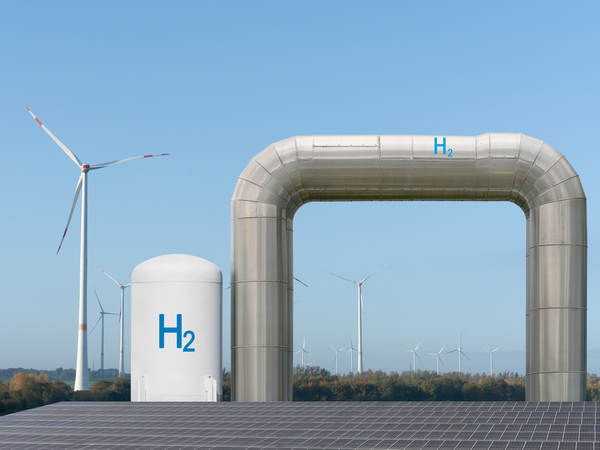
The key contribution of Naco Tech will be to make green hydrogen easier to scale and cheaper to produce. “At a broader level, green hydrogen can help Europe build a more complete and independent energy system,” explains Nazarovs. “Renewable electricity from wind and solar can be used to produce hydrogen, which can then be stored and transported. The hydrogen can thus be used again in industry, heavy transport, power balancing and other sectors that are difficult to electrify directly.” This has the potential to create a much stronger energy cycle around European renewable resources, instead of relying on imported fossil fuels and geopolitically sensitive gas supplies. “The larger goal is to support lower-cost green hydrogen, more resilient European supply chains, less dependence on imported fossil energy, and a more sustainable industrial future,” concludes Nazarovs.