Feeling the pressure: how the gut senses when it needs repair

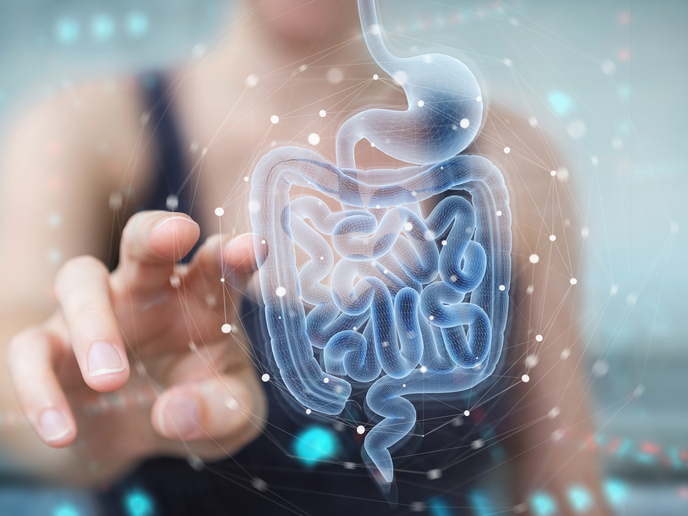
Most people think of the gut as responding to what we eat or the microbes living inside it. But every day, our intestines are also being stretched, squeezed and compressed as they move food through the digestive system. According to Ditte Skovaa Andersen, associate professor at the University of Copenhagen(opens in new window), these physical forces may be just as important as chemical signals in keeping the gut healthy. “The gut experiences constant stretching, squeezing and pressure as it digests and moves food through the digestive system,” she explained. “These mechanical forces help gut cells regulate growth, repair, and nutrient absorption.” With the support of the Marie Skłodowska-Curie Actions programme, Andersen explored how intestinal stem cells detect and respond to these forces as part of the MECHANOGUT project. Her work focused on mechanosensation – the ability of cells to sense and respond to changes in their physical environment.
A self-renewing factory
The gut constantly renews itself. Old cells are shed and replaced by new ones generated by intestinal stem cells. Understanding how these stem cells know when to divide and what type of cells to produce is a central question in regenerative biology. “I often describe the gut as a self-renewing factory,” Andersen said. “Stem cells continuously produce new cells to replace old ones, and we are studying how the physical forces generated by the loss of old or damaged cells help direct that process.” To investigate these mechanisms, Andersen used the fruit fly, Drosophila, a powerful model organism that shares many of the fundamental biological processes found in humans. “The fly gut allows us to observe these processes in a living organism with a level of precision that is difficult to achieve in mammals,” she explained.
How stem cells feel damage
One of the project’s key discoveries is that stem cells appear able to detect when neighbouring cells have been lost or damaged. The researchers found that a mechanosensitive receptor known as Cirl/Latrophilin(opens in new window) becomes highly active following damage to the gut lining. Their results suggest that stem cells use this pathway to sense changes in their surroundings and coordinate tissue repair. “We propose that stem cells use this pathway to sense the loss of mature neighbouring cells and coordinate their differentiation to replace the cells that have been lost,” Andersen added. This process is particularly important for maintaining the gut barrier – the protective layer that allows nutrients into the body while keeping harmful bacteria and toxins out. When the barrier weakens, inflammation can occur, contributing to digestive disorders and other health problems.
Implications beyond the gut
The findings could eventually help scientists better understand conditions such as inflammatory bowel disease and age-related declines in tissue repair. “Mechanical signals are emerging as critical drivers of gastrointestinal diseases, such as inflammatory bowel disease and colorectal cancers,” Andersen noted. More broadly, the work highlights a growing realisation in biology: cells do not respond only to chemicals, but also to physical forces. Understanding how they interpret these mechanical cues could therefore have implications far beyond the digestive system. By revealing how stem cells combine physical information with biological signals, MECHANOGUT is helping researchers understand not only how the gut repairs itself, but how complex living tissues maintain their structure throughout life.