A biodigital twin for safer pregnancy research

Across Europe, the vast majority of neonatal and foetal deaths occur in infants born prematurely. Despite medical advances, the number of preterm births is increasing as maternal age rises and environmental risks grow(opens in new window). Understanding how chemicals and medicines affect the developing foetus remains a critical challenge, as early pregnancy cannot be directly studied in humans. Although the human placenta is well studied, modelling its transport behaviour under controlled laboratory conditions remains challenging. Animal models poorly replicate the biology of the human placenta and cannot faithfully predict the adverse pregnancy outcomes caused by exposure to harmful chemicals and drugs.
Closing a gap in pregnancy safety research
The EU-funded LIFESAVER(opens in new window) project set out to address this evidence gap by developing a biodigital twin that recreates the placental environment and maternal-foetal interactions in the laboratory. The platform combines advanced in vitro models with computational simulation to study how substances cross the placental barrier and potentially affect foetal development. “Pregnancy safety research faces a unique dilemma. We cannot test directly in early pregnancy, and animal models do not reflect human placental function. That leaves a serious evidence gap,” explains Michael Gasik, scientific manager of the LIFESAVER consortium. The project’s vision is to safeguard pregnant women and foetuses by generating the scientific evidence needed for better regulation of chemicals and pharmaceuticals. In the long term, this could support healthier pregnancies and reduce the risks associated with premature birth, which is linked to lifelong conditions such as infections, diabetes, cerebral palsy and cognitive impairment.
A biodigital twin of the placenta
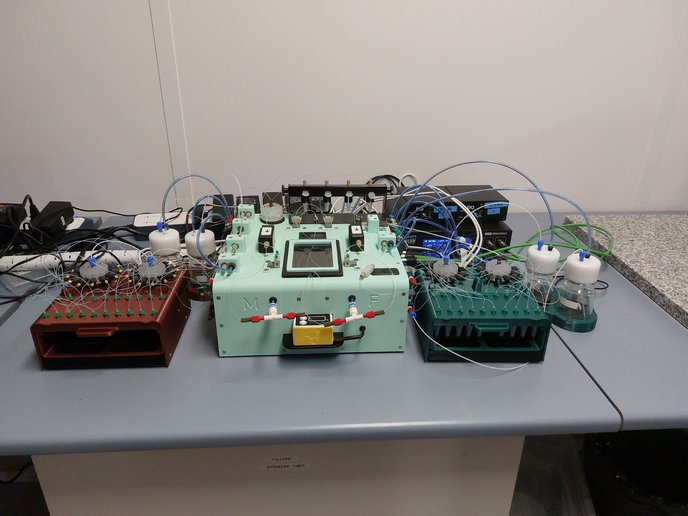
LIFESAVER developed a hybrid system that integrates laboratory experimentation with digital modelling. The team employed 3D bioprinting and tissue engineering to build functional placental tissue models that emulate the biological behaviour of the maternal-foetal interface. The in vitro system is based on a dual-circuit microfluidic platform(opens in new window) that mimics maternal and foetal circulation separated by a barrier layer. This set-up enables precise control of flow conditions, automated introduction of chemical compounds and timed sampling of transported substances. It also allows the studying of transport kinetics as a time-dependent process. The recorded data is then linked to computational simulations that model transport processes across the placental barrier. “A biodigital twin allows us to recreate maternal and foetal circulation under controlled conditions and combine experimental data with digital modelling. That integration is what makes the approach powerful,” highlights Gasik.
Towards safer chemicals and medicines
Laboratory validation confirmed stable operation of the dual-circuit platform and reproducible handling of test compounds. Proof-of-concept transport experiments demonstrated behaviour consistent with expected permeability across the membrane barrier. “The key result is that we can quantify transport under controlled and reproducible flow conditions. That is essential for modelling maternal–foetal exposure realistically,” emphasises Gasik. In addition, researchers have prepared policy recommendations and engaged with stakeholders to examine how such platforms could support new approaches to chemical and pharmaceutical safety assessment. They could help reduce reliance on animal testing and provide more human-relevant evidence for pregnancy safety research. They may also support future European policy efforts aimed at protecting maternal and foetal health.