The biological battery that could power future farms

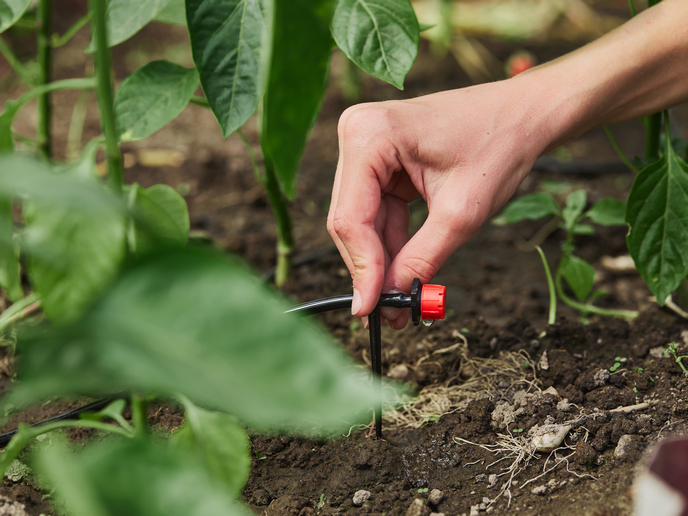
Farms of the future will have to source more sustainable energy supplies for distributed low-power applications, such as precision irrigation and environmental monitoring. “Current solutions typically rely on conventional batteries or external power sources. These have limited lifetimes, are high maintenance and come with negative environmental impacts. Meanwhile, renewable alternatives, such as solar or wind, remain intermittent, unstable or costly,” explains Naroa Uria, coordinator of the SOIL2POWER(opens in new window) [DB1.1]project which was funded by the European Innovation Council(opens in new window). Driven by the needs of small and medium-sized farms for accessible, reliable and low-maintenance energy, SOIL2POWER tapped into the metabolic activity of soil microbes to generate electricity. “Our demonstration of optimised soil-based bioenergy systems operating in real agricultural settings, offers a pathway to scalable nature-based energy solutions,” says Uria, from Agròpolis – Polytechnic University of Catalonia(opens in new window), an experimental agricultural site used for field validation.
Leveraging bioelectrochemical systems
SOIL2POWER created electricity-generating microbial fuel cells by exploiting the natural metabolic activity of soil microorganisms. Microorganisms consume organic matter, releasing electrons as part of their metabolism. These electrons are transferred to an anode(opens in new window), then flow through an external circuit reaching a cathode(opens in new window), where they react with oxygen and protons, forming water and completing the electrical circuit. A key project innovation was the creation of electrogenic bacterial coatings on the surface of the anode electrodes, based on the immobilisation of selected electrogenic bacteria. These facilitate, and stabilise, the transfer of electrons from the microorganisms to the anode. “Controlling the formation and structure of these biofilms improves the efficiency and reproducibility of the microbial fuel cell, overcoming the variability associated with naturally formed biofilms,” adds Uria. Meanwhile, work on substrate characterisation provided insights into the factors affecting biobattery performance. “Analysing the microbial communities and physicochemical composition of different substrates helped identify the parameters influencing performance, and facilitated substrate selection for microbial fuel cells,” notes Uria. To overcome the low and variable energy production of microbial fuel cells, system components were optimised individually – using ultra-low-power designs, before optimising the system’s overall architecture. “This approach revealed each element’s contribution to power enhancement, and the difference integrating the full system makes to reliable operations,” adds Uria. Integrating the components resulted in BIOOCELL, a functional prototype for precision agriculture applications, which underwent both laboratory and on-site validation. On-site trials at Agròpolis generated data on system behaviour under a realistic agricultural scenario, essential to understanding the influence of external variables such as temperature and moisture. “Overcoming the inherent challenges of working at the cutting edge of microbiology and engineering, we successfully demonstrated the system’s capability to generate and manage energy directly from the soil, supporting low-power applications like irrigation control,” remarks Uria.
Deploying digital technologies in rural and remote areas
SOIL2POWER’s biological battery supports the transition to more efficient water use and smarter agricultural practices, central to EU strategies related to climate adaptation(opens in new window), sustainable land management and food systems(opens in new window), as well as the circular economy. While BIOOCELL’s most immediate application is likely to be powering irrigation valves for precision agriculture, it will also be of interest for other low-energy devices, such as environmental monitoring systems. “Making reliable, in situ energy-generating devices available to small and medium-sized farms increases their access to agricultural innovations, for more resilient food production with less environmental impact,” says Uria. Focused on real-world deployment, the team is currently developing commercialisation plans which include direct market entry and strategic partnerships to scale production and distribution.