Switching gears to emission-free power transmission


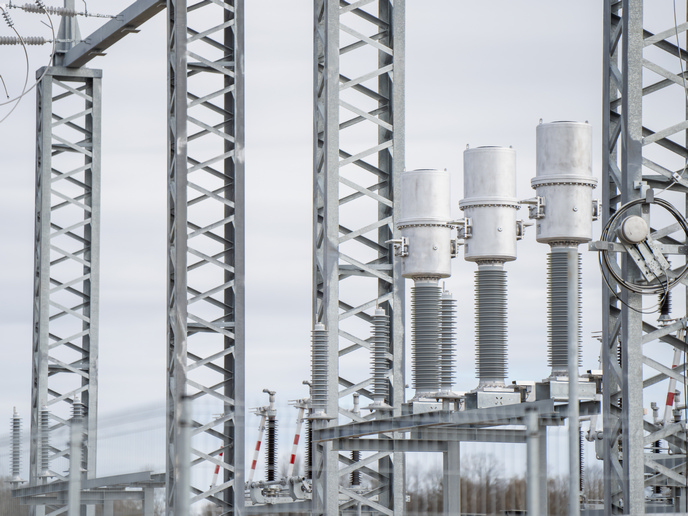
The EU-funded MISSION(opens in new window) project is developing switchgear technologies that are free of sulfur hexafluoride (SF6), the world’s most potent greenhouse gas. The project’s innovations promise to help build a strong and sustainable electric grid for a greener Europe. SF6 gas has been used as an insulating and arc-quenching medium in high-voltage switchgear for alternating current (AC) and direct current (DC) systems for over 50 years. However, it has a high global warming potential of about 24 300 times that of CO2 over a 100-year period. In addition, the fact that it remains in the atmosphere for millennia has led the EU to begin phasing it out. To support Europe’s decarbonisation goals, MISSION is developing switchgear technologies in which SF6 is replaced with a mixture composed of 80 % nitrogen and 20 % oxygen. This mixture will be used for insulation in medium- and high-voltage AC and DC switchgear, enabling emission-free power transmission.
Environmentally friendly tech for AC transmission
Central to MISSION’s strategy for AC grids is the creation of the first 420 kV vacuum circuit breaker. This live-tank breaker uses vacuum interrupters for arc quenching – safely switching currents on and off to instantly extinguish dangerous electrical arcs created when a circuit is broken. Crucially, it maintains the exact dimensions of existing SF6-filled units, allowing for seamless retrofitting that minimises installation costs and downtime. Following major validation and development tests confirming its ability to interrupt short circuits and type testing in early 2026, pilot installations have been planned for Marsillon (France) and Dagali (Norway) later in the year. These pilots will validate the technology under extreme climatic conditions, ensuring reliability for real-world grid operations.
The high-voltage DC future
While high-voltage AC systems currently dominate power transmission, the future of the European grid relies heavily on high-voltage DC (HVDC) technology. HVDC is essential for integrating renewable energy as it can transport electricity over vast distances with lower energy losses than AC. This makes it the ideal solution for connecting remote offshore wind farms and large-scale solar plants to the grid. However, the DC infrastructure needed to make this possible currently lacks SF6-free options at high voltage levels. MISSION is therefore developing a 550 kV HVDC gas-insulated switchgear. This compact technology is vital for space-constrained environments, reducing the footprint of onshore switchyards by up to 95 % compared to air-insulated solutions, while also offering substantial space savings offshore. The project is finalising the design and conducting extensive testing to ensure the system can handle the complex electric field distributions inherent in DC transmission. The consortium is also developing an ultra-fast 12 kV medium-voltage DC circuit breaker. This component is critical for protecting future medium-voltage DC grids that will likely serve as the backbone for microgrids, battery energy storage systems and electric vehicle charging. Together, the MISSION (eMISsion-free HV and MV transmiSION switchgear for AC and DC) project’s innovations will pave the way for a safer power grid and the eventual realisation of a full DC transmission grid, demonstrating that high-performance transmission is compatible with the EU’s climate goals. For more information, please see: MISSION project website(opens in new window)