Recyclable polyethylene reveals damage and insulate cables

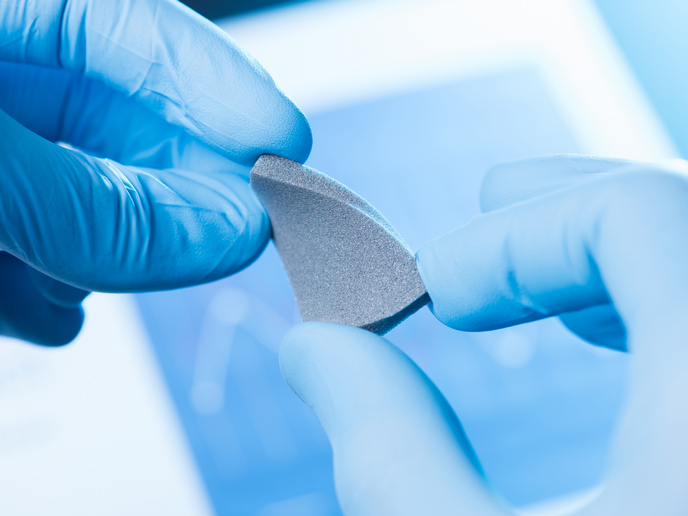
Plastics used in strong composites, coatings and high-voltage electrical insulators are often difficult to recycle because they are designed not to melt or flow once cured. That durability is useful in service but a headache at end of life. Supported by the Marie Skłodowska-Curie Actions programme, the VIT(opens in new window) project worked on vitrimers, which are polymers that can behave like thermosets during use, but can be reshaped, repaired or reprocessed when heated. The project focused on making these materials both functional and recyclable. It explored optical molecules that can signal damage, moisture or humidity permeation, produced self-reporting and healable films, and tested polyethylene-based systems for high-voltage cable insulation. This work links to wider European research on recyclable thermosetting polymers and vitrimers for demanding composite applications.
Recyclable plastics with built-in damage alerts
One result was a set of materials that can show stress, scratches, humidity or oxygen entry through a visible colour or fluorescence change. Roberta Pinalli, VIT project coordinator, explains: “Thanks to our mechanophores or optical molecules, it is possible to detect damage, or the passage of humidity or oxygen, with the naked eye, because cracks, oxygen or humidity cause a clear change in colour.” That could help reveal small scratches or microcracks before they become visible as larger failures. In selected systems, the optical response could be retained or restored after reprocessing, bringing the materials closer to the reuse-repair-recycle concept.
Cable insulation and thermosets with a second life
VIT partners also examined more practical early applications, including high-voltage cable insulation, composites and thermoset parts. Conventional cross-linked polyethylene is widely used in high-voltage cable insulation, but it is hard to recycle. VIT tested polyethylene-based ionomers and vitrimer formulations as possible alternatives, with electrical behaviour shown to be comparable to conventional materials in the project’s tests. The most delicate property to preserve after recycling was mechanical strength. In polyethylene-based vitrimers, Pinalli explains, “after recycling we observed a stiffer behaviour.” That suggests the material can be reprocessed, but its mechanical response depends strongly on processing history and recycling conditions. For uses such as cable insulation and structural composites, that matters because recycled materials still need predictable long-term performance.
Why manufacturing still limits wider vitrimer use
Project work demonstrated that selected self-reporting vitrimer systems could be reprocessed at least four times while retaining their functional response, although further cycles were not tested. After reprocessing, the materials became less elastic and mechanically weaker in some respects, while their stiffness remained broadly similar. Industrially relevant processing routes, including reactive extrusion, compression moulding and injection moulding, were also demonstrated on selected polyethylene-based systems. The main obstacle is still translating lab chemistry into robust manufacturing. Pinalli is direct about it: “Processing equipment is the biggest barrier, because processing a vitrimer is rheologically quite different from processing a thermoplastic: viscosities are significantly different, and vitrimer viscosity is higher than thermoplastic viscosity.” That means companies may need adapted temperature windows, drying protocols, residence times and mixing conditions. Those manufacturing changes are the bridge between promising recyclable thermoset and real products. The VIT project shows that smart vitrimers can report damage, support repair and be reprocessed. However, replacing today’s hard-to-recycle thermosets will still require long-term validation, standardised testing and processing routes that industry can run reliably.