



Pairing climate vulnerable regions to spread innovative adaptation solutions

As global temperatures continue to increase, so do the impacts of climate change on the day-to-day lives of Europeans. “From extreme heatwaves to catastrophic flooding and devastating wildfires, climate change is already putting our lives, prosperity and well-being at risk, and without preventative actions, the risks will only become worse,” says Vilija Balionyte-Merle, senior business developer at Norwegian independent research firm SINTEF(opens in new window). Addressing this risk is the RESIST(opens in new window) project, funded under the EU Mission on Adaptation to Climate Change(opens in new window). Led by SINTEF and innovation consultants INOVA+(opens in new window), the project aims to increase climate resilience, accelerate the transformation of 12 selected climate-vulnerable regions in Europe, and reduce the time to market of adaptation solutions.
The power of twinning
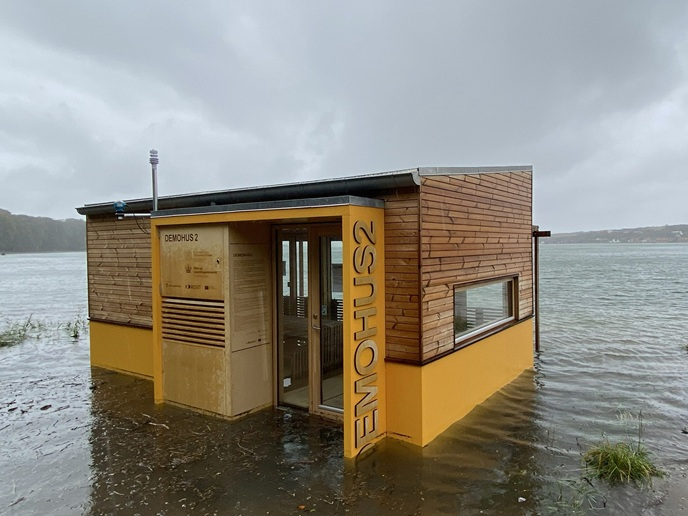
The project is developing and demonstrating nearly 100 innovative climate change adaptation solutions. Each is being designed, developed and deployed in one of four pilot regions experienced in adaptation measures: central Denmark, south-west Finland, central Portugal and north-east Spain. Each of these regions is paired with two less-experienced twinning regions facing similar climate challenges. Leveraging the experience of the leading regions, RESIST tested and validated its climate solutions before transferring and scaling them in the twinning regions. For example, Argos, an emergency alert system developed in Catalonia(opens in new window), was transferred to the twinned regions of Italy’s Puglia and Portugal’s Baixo Alentejo. Supported by RESIST, the twinned regions conducted additional research and tailored the system with new datasets, functionalities and scenarios. Puglia, whose economy is heavily dependent on tourism, adapted the early warning solution to provide information to tourists on how to protect themselves during extreme heatwaves. In Baixo Alentejo, partners adjusted the software to issue early warnings about wildfire conditions. With the support of RESIST, authorities in Denmark developed an app that uses data on groundwater levels to provide citizens with an advanced warning about potential flooding. The region also developed a prototype model of a flood-resistant house, designed to allow water to enter and exit without causing damage. The project conducted tests to examine how various insulation, building materials and design solutions perform during flooding. Findings were shared with authorities in Blekinge, Sweden and Zemgale, Latvia, two other regions that are becoming increasingly vulnerable to floods. “By sharing ideas, knowledge and solutions, we’re empowering regions to build a more climate-resilient Europe,” notes Balionyte-Merle.
Towards market uptake and large-scale deployment
The project is helping to position Europe as a global leader in climate adaptation, attracting interest from the United States and China. “Europe is at the frontlines of climate change,” adds Balionyte-Merle. “It is only natural that we leverage our research capabilities for this urgent global challenge.” Researchers are now focused on promoting the market uptake of RESIST’s solutions, with the goal of having 100 solutions fully market ready at the end of the project. “To move RESIST’s technological solutions closer to commercial and large-scale deployment, the next key step is to continue our exploitation activities, business-readiness support, and engagement with investors, public authorities and innovation ecosystems,” explains Balionyte-Merle. Progress is already visible. HYDS, an SME working on early warning systems in RESIST, is now exploring new market opportunities in Croatia. “This shows how we are helping our partners move beyond research and demonstration, towards real market positioning,” she says.