What happens when AI runs its own lab?

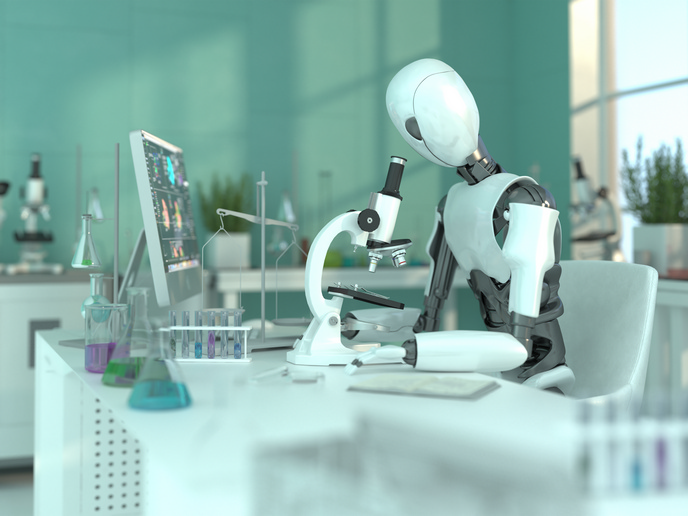
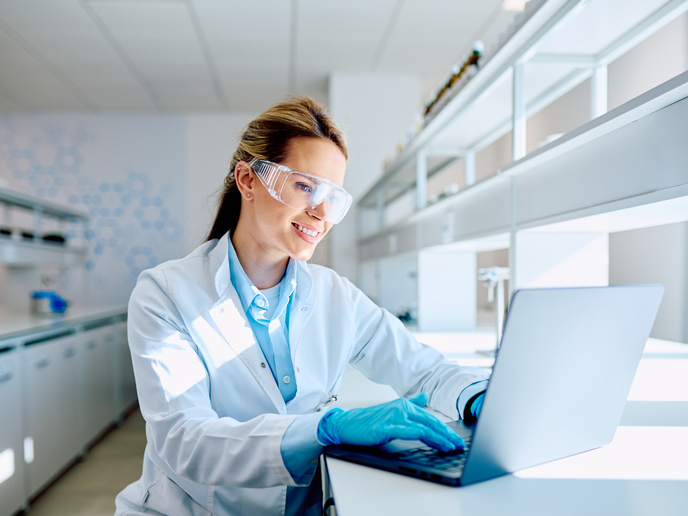
Scientists working together in a laboratory, reviewing data and discussing their latest findings. Surrounded by all kinds of equipment, they test their ideas to determine how to benefit the world around them. This is how we all picture labs, whether it’s at a university or a company’s R&D centre. Now if you remove the humans from this setting, there wouldn’t be much fundamental, discovery-driven research taking place, would there? Not quite. Meet Eve, a general-purpose robot scientist created by Ross King, professor in the Department of Computer Science and Engineering at Chalmers University of Technology in Sweden. It was specifically designed for drug discovery.
When AI starts doing science
Researchers at Chalmers revamped Eve with large language models and automated reasoning. No humans needed to generate hypotheses, design experiments, interpret results and even keep updating knowledge as new results come in. They presented the AI system in the ‘Journal of the Royal Society Interface’(opens in new window). “It is too much information for a human to analyse, but our AI scientist could identify promising biological questions, recommend experiments to test them, evaluate experimental outcomes and iteratively refine its understanding based on new evidence,” commented Ievgeniia Tiukova, postdoctoral researcher at the Department of Life Sciences at Chalmers, in a news article(opens in new window). “Rather than serving solely as decision supporting tools, the AI scientist actively generates new scientific knowledge.” Eve analysed a database of about 60 000 public scientific records describing how genes, chemicals and traits interact in brewer’s yeast. After that, it came up with almost 2 000 testable ideas about how different nutrients affect how cells grow and handle stress. Next, Eve evaluated these hypotheses, selected appropriate comparison controls, and translated the ideas into step-by-step, machine-readable instructions for lab usage. After testing was complete, Eve reviewed the data, evaluated its predictions, and automatically updated or adjusted any disproven hypotheses for future experiments. All in all, Eve took full charge of planning the yeast experiments and telling other robots what to do. People only stepped in for basic tasks like checking safety and moving plates around.
The lab of the future takes shape
The study researchers pointed out that science is heading toward automation, noting that new breakthroughs in robotics, AI and technology enabling scientists to run experiments, process samples or analyse data on a massive scale are completely changing how experiments are carried out. “AI Scientists will collaborate with human scientists to accelerate discoveries across biology, medicine and biotechnology. Such AI systems have the potential to reduce the time required to explore complex scientific questions, and optimise the use of laboratory resources,” explained King. Of course, people will always play a vital role in research. “Human scientists remain essential for defining research priorities, interpreting broader scientific significance and ensuring ethical oversight,” concluded King. “Future generations of autonomous discovery systems will become increasingly capable of collaborating with human scientists, becoming valuable partners in addressing some of the most challenging questions in biology and medicine.”