How to optimise sustainability and creativity in digital media

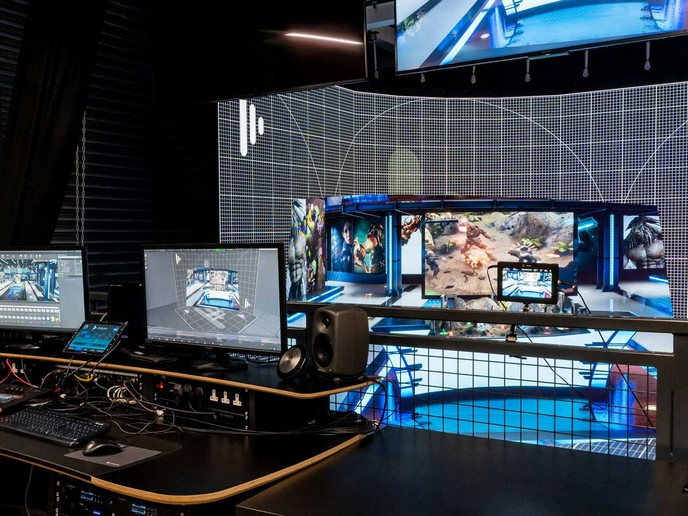
Film-makers, broadcasters, streaming services and other entertainment sectors rely on established and evolving technologies to feed the skyrocketing demand for digital content. To meet this demand, media industries face a mounting need for energy, human resources and data processing. The EU-funded EMERALD(opens in new window) project addressed the needs of entertainment and media industries by centring sustainability and support for human creativity.
Supporting content creators
With a consortium of two universities and five leading companies operating in the digital media ecosystem, EMERALD heard what companies want from AI collaboration. Without exception, partners at these companies want to see changes that will allow content creators to focus more of their time and energy on artistic choices. Project coordinator Coloma Ballester shares: “Throughout the project, broadcasters, post-production companies and technology providers consistently told us that they were not looking for AI to replace creative professionals. They wanted AI to remove repetitive technical operations, accelerate production and simplify increasingly complex workflows.” The digital media sector is large and well established. Project partners knew that disruptive changes requiring steep learning curves would not be readily adopted. Instead, they focused on efficient tools that integrate easily into existing workflows. The diverse structure of the consortium, and its effective collaboration, made this an easy task, as many of these tools are already being used in industrial settings, providing the most natural way for content creators’ technical skills to evolve.
Prioritising sustainability
You can’t optimise what you can’t measure: this statement guided the project’s approach to understanding energy consumption. As Ballester says, “one of EMERALD’s defining achievements was treating sustainability as a design objective rather than an afterthought. Instead of focusing only on developing more efficient algorithms, the project addressed sustainability at multiple levels.” EMERALD also reduced the data demands of high-quality virtual production. Tests showed that modern codecs, including royalty-free AV1, could deliver perceptually similar quality to near-lossless formats while reducing bitrates by two to five times for complex content and by up to 230 times for simpler material. This can substantially reduce the bandwidth and storage required by virtual production workflows. Directly measuring energy consumption wasn’t the only way EMERALD addressed sustainability. The project redesigned AI workflows to make them intrinsically more energy efficient. Its approach to denoising, the computational process for cleaning up the visual noise of digital images, is a prime example. The project’s field-programmable gate array(opens in new window) AI denoising system, ReTiDe(opens in new window), demonstrated 12 times greater energy efficiency than comparable options. Another innovation that led to substantial energy savings was task-adaptive streaming. Post-production requires transmitting high-quality video using cloud-based services. By focusing strictly on the work being addressed, such as colour grading, editors can adjust bandwidth to target a specific task and avoid sending maximum-quality video when it is unnecessary. This innovation reduced bandwidth requirements by a factor of 40 while still enabling the targeted workflow. Prioritising sustainability supports human creativity and meets the needs of a growing industry. Ballester states: “As demand for video and extended reality grows, the industry faces growing pressures on time, resources and energy. The EMERALD project has tackled this by automating the media production pipeline - making it faster, more energy efficient, and less resource intensive.”