Smarter fertilisation, one crop at a time

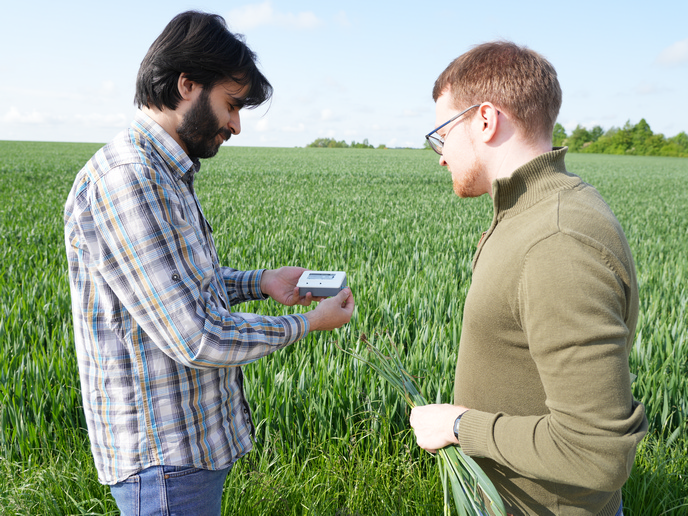
Getting the right amount of fertiliser onto a field is a difficult balancing act. Too little can reduce yields, while too much wastes money and can contribute to greenhouse gas emissions and nitrate pollution. The EIC-funded LiveSen-MAP(opens in new window) project developed a rapid way for farmers to measure how much nitrogen and phosphorus their crops have taken up before visible signs of deficiency appear. “With the solution developed, we are optimising fertiliser inputs based on the plant nutrient demands before a deficiency becomes visible,” says Tobias Vöpel who coordinates the project at the Technical University of Munich(opens in new window) in Germany. The approach could be particularly valuable as weather becomes more unpredictable. “This is particularly valuable with extreme weather events where rain is sparse inhibiting nutrient uptake or concentrated heavy rainfalls wash out nutrients before the plants can take them up,” Vöpel says.
From field measurements to fertiliser maps
The project developed a portable test that brings laboratory-level nutrient analysis directly to the field. As Vöpel explains, “We have developed an easy-to-use instant lab in the palm of your hand, requiring minimal training and sample preparation.” Thousands of test strips for nitrate and phosphate were tested with farmers in Germany, Croatia, Hungary and Serbia. Their feedback led to changes that made the strips easier to handle. The measurements are combined with satellite imagery to divide fields into up to three zones according to plant performance. Farmers can then measure nutrients at selected locations and receive fertilisation recommendations tailored to each zone.
Less fertiliser, lower costs
Field trials produced promising results. Farmers using the recommendations reduced fertiliser inputs by up to 25 % while maintaining similar yields, therefore saving around EUR 90 per hectare in fertiliser costs. In other cases, adjusting inputs to meet higher crop demand improved protein content or yields, with an estimated increase in contribution margin of around EUR 160 per hectare. tonnes of CO2 equivalent per hectare. If adopted across wheat production in the EU(opens in new window), the technology could potentially reduce emissions by an estimated 6.4–8.4 million tonnes of CO2 equivalent per year.
Towards the market
Collecting enough measurements across different fields and seasons to train machine-learning models was a major challenge. Working closely with farmers helped the team improve the technology and understand what customers wanted. “We learnt that they prefer to buy the solution once it becomes available rather than signing up to a subscription-based model,” says Vöpel. The team is now working to standardise, automate and scale production of the measurement device and test strips. Pilot projects are continuing, with commercial availability for a limited group of farmers expected in 2027. The researchers also hope the technology will eventually be adopted outside Europe, extending its potential contribution to more resource-efficient agriculture worldwide.