Human gut ‘avatars’ shed light on neglected parasitic disease

Chagas’ disease, caused by the parasite Trypanosoma cruzi (T. cruzi), affects millions of people mainly in South America, and is spreading to Europe though migration. Classified by the World Health Organization as a ‘neglected disease’(opens in new window), it is a lifelong infection that can damage the heart and the gut. The GUT INSTINCT project is important because currently only Chagas’ patients with cardiac symptoms are treated. Those with gut symptoms alone receive no treatment at all, despite the gut being a known reservoir for the parasite. Neuroscientist and parasitologist Archie Khan was researching digestive Chagas’ disease in the United Kingdom. Then, with the support of a two-year Marie Skłodowska-Curie Actions(opens in new window) grant for GUT INSTINCT, she joined Maxime Mahé’s lab at the National Institute of Health and Medical Research(opens in new window) (Inserm), Nantes University, France. Mahé pioneered the development of human intestinal organoids – three-dimensional clusters of cells that mimic the gut’s structure and functions.
Human intestinal organoids mimic the gut
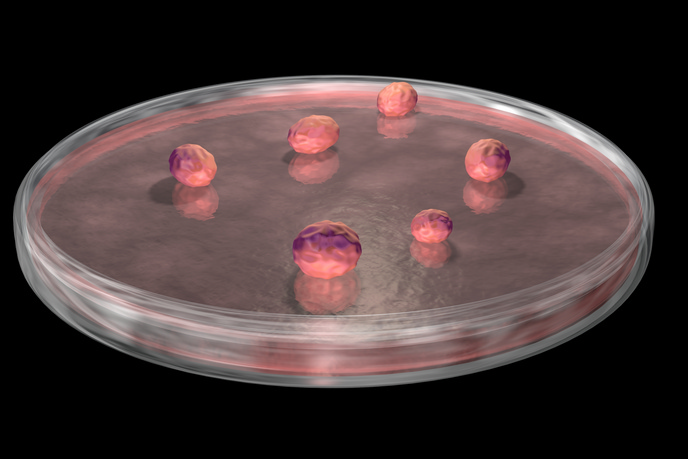
Organoids are grown from human stem cells that are chemically guided to become gut tissue. “We tell the cells what to become. This is where the magic happens – the cells, at some point, know what to do and organise themselves into that structure,” Mahé explains. Mahé describes these structures as ‘avatars’. “It’s a model. We are not recreating an organ,” he notes. “It looks like a little blob of cells, about a millimetre, in the Petri dish.” Additional components, such as enteric nerves – the nerves embedded in the gut wall – can be added. The resemblance to real human tissue is validated using databases such as the Human Cell Atlas(opens in new window).
Using organoids to look at infectious disease
Khan successfully integrated immune cells – specifically macrophages, the body’s first line of defence – into Mahé’s existing organoid platform. “My focus was to mimic the nervous system and the immune cells within the gut to try and understand how they communicate with each other to control infection,” she says. Khan notes: “It’s a first in this field.” While some intestinal interactions were previously observed, such as in the EU-funded Organoid project, no one had captured all three components: gut tissue, nerves and immune cells in a single human model suitable for studying infection. Khan then introduced T. cruzi parasites into the lab surrogate. Using microscopy, she watched them invade cells, multiply and spread to neighbouring cells. “It was beautiful to be able to see these parasites invading the gut organoid model as they would in a real gut,” she adds.
Possible communication channels
The biggest surprise was her discovery that the macrophages were expressing nerve-cell receptors that normally belong on neurons – the nerve cells that communicate via chemical or electrical signals. It suggests a channel of communication between the gut’s immune and nervous systems that the parasite may exploit as a gateway to establish infection. “That was absolutely shocking,” Khan remarks. “Previously, these neuronal receptors on macrophages were seen only in mouse models. We did not expect to capture this in an in vitro model.” Mahé explains: “It’s a huge leap forward,” adding the system could be adapted to study other parasitic and infectious diseases. He acknowledges, however, that it cannot entirely replace animal models. On the back of her groundbreaking work into what she calls “a neglected aspect of a neglected disease,” Khan secured a tenured position at Inserm – a rare achievement on completing a postdoctoral fellowship. She now wants to investigate exactly how the gut’s nerves and immune cells communicate to control infection outcomes.