Nobel honours EU-funded scientist ushering in new era in neuroscience


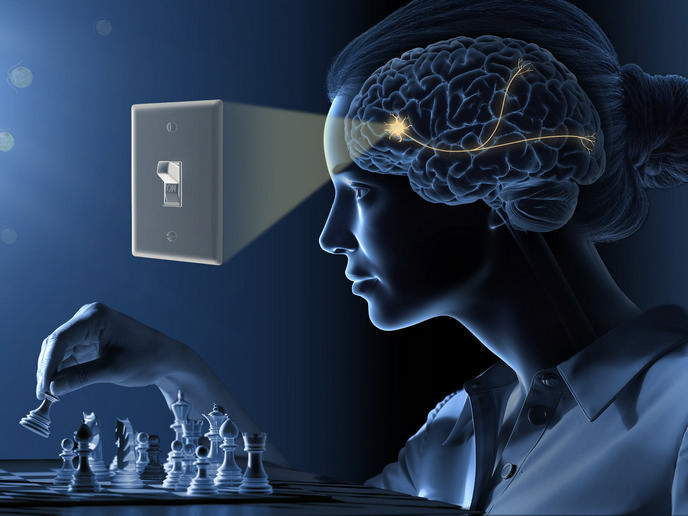
Scientist Peter Hegemann of Humboldt University of Berlin, Germany, has won the 2026 Nobel Prize in Physiology or Medicine for his groundbreaking contribution to the development of optogenetics – a technique used to control and monitor the activity of neurons or other cells with light. He shares this award with two other scientists, Karl Deisseroth and Georg Nagel. Together, the three professors have received the Nobel Prize “for their discoveries concerning light-gated ion channels and optogenetics.”
Unlocking the secrets of the brain with light
By allowing us to show how nerve cells shape memories, feelings and behaviours, optogenetics is fundamentally transforming our understanding of the brain. In 2003, Hegemann and Nagel discovered a light-sensitive protein called channelrhodopsin in a single-celled alga. Deisseroth then transformed the protein into a light-controlled switch for nerve cells. The three scientists’ research is now providing valuable insights into brain disorders such as schizophrenia, dementia, epilepsy and addiction. It is also being used to try and restore sight in people with visual loss caused by disorders such as retinitis pigmentosa, by inserting a light-sensitive protein into the retina. “Congratulations to today’s three Nobel Prize laureates in Physiology or Medicine! We’re proud that Peter Hegemann is amongst the winners,” commented European Research Council (ERC) President Maria Leptin in a recent news item(opens in new window). “The European Research Council has supported his cutting-edge research with two grants since 2016. Their breakthroughs are a reminder of why Europe needs to invest in blue-sky research and give outstanding researchers the freedom to follow their scientific instincts.”
A legacy of European support
Hegemann first received EU support for his pioneering research in 2016, in the form of an ERC Advanced Grant for the MERA (Mechanism of Enzyme Rhodopsin Activation) project. Over five years, he explored a previously unknown light-sensitive protein called rhodopsin-guanylyl-cyclase. The laureate is also part of an ERC Synergy Grant received together with two other grantees in 2022 for the SOL (Switchable rhodOpsins in Life Sciences)(opens in new window) project. This ongoing project aims to extend optogenetics to a wider range of biological systems. The biophysicist further contributed to another EU-funded project, STARDUST (in vivo optogeneticS, elecTrophysiology and phArmacology with an ultRasonically-powered DUST for Parkinson’s Disease)(opens in new window), which developed a technology platform for future wireless implantable micro-scale devices enabling in vivo electrophysiology, optogenetics and ultra-localised drug delivery in freely moving animals. This Future and Emerging Technologies project ended in 2022. Ekaterina Zaharieva, European Commissioner for Startups, Research and Innovation commented on Hegemann’s remarkable work: “The European Union is proud to have supported Professor Hegemann. His achievements show why giving scientists the freedom to pursue bold ideas can open entirely new fields of knowledge and create opportunities for future medical advances.” For more information, please see: MERA project SOL project web page(opens in new window)