The radio sky: now open for exploration

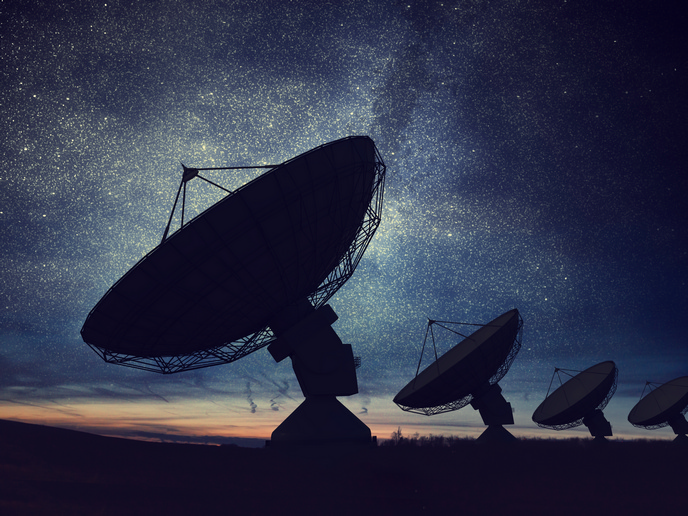
By combining data from four distinct cosmic signals – light (electromagnetic waves), gravitational waves, neutrinos and cosmic rays – emitted by a single astrophysical event, multi-messenger astronomy has revolutionised how we see the universe. While multi-messenger astronomy provides astronomers with a rather complete picture of an astrophysical event, it fails to capture one key ingredient: radio waves. A subfield of astronomy, radio astronomy studies celestial events by detecting natural radio-frequency emissions instead of visible light. “Many of the most revealing events in the universe are short-lived and are thus often missed, but if we could capture them, it would help us understand the laws of physics under the most extreme conditions,” says John Antoniadis, a researcher at the Institute of Astrophysics(opens in new window), part of the Foundation for Research & Technology – Hellas(opens in new window) (FORTH), Greece’s largest public research centre. This is where ARGOS-CDS(opens in new window) comes in, an EU-funded project that aims to combine radio observations with gravitational-wave and other astronomical observations.
Monitoring large swaths of the universe
ARGOS-CDS looks to address a central challenge in modern astronomy: how to observe large areas of the radio sky frequently and sensitively enough to capture events that would otherwise be missed. “From understanding the nature of dark matter and dark energy to the origin of fast radio bursts and the properties of extreme gravity, our ambition is to open the dynamic radio sky for exploration,” explains Antoniadis, who coordinated the project. To do so, the project has delivered a blueprint for building a European astronomical facility capable of conducting continuous wide-field monitoring of the sky at centimetre wavelengths. “Our conceptual design foresees combining many relatively small radio dishes into a powerful instrument that can monitor large areas of sky and rapidly share discoveries,” adds Antoniadis.
Planting the seeds towards a cutting-edge radio telescope
By identifying the scientific requirements and providing the engineering studies, technology development and hardware prototyping, the project has established a credible path towards making such an instrument a reality. It also tested whether such a pathway is in fact feasible by installing and integrating a small-scale pathfinder at FORTH. The pathfinder served as a practical platform for testing and validating the project’s innovative results in receiver technology and digital processing. It also provides opportunities to train students and early-career researchers in the full process of building and using a cutting-edge radio telescope. “Delivering a detailed design and building the pathfinder required astronomers, engineers and technical teams to solve problems across the entire signal chain, which is an achievement in its own right,” notes Antoniadis. “As a result, we now have both a tangible instrument and a team capable of taking the next steps.” Those next steps include expanding the pathfinder towards a full-scale instrument, as well as strengthening scientific partnerships and pursuing additional funding.
Advancing astronomy, enhancing European competitiveness
ARGOS-CDS has made the scientific case and provided the technical solutions for deploying a cost-efficient radio telescope in the near future. “We provided the road map, foundation and test bed needed to build an instrument that can deliver the astrophysical discoveries that will define tomorrow,” concludes Antoniadis. Not only has the project’s work helped advance radio astronomy, it also strengthened European expertise and competitiveness in antennas, digital electronics and data-intensive science.