Building a space-based servicing infrastructure

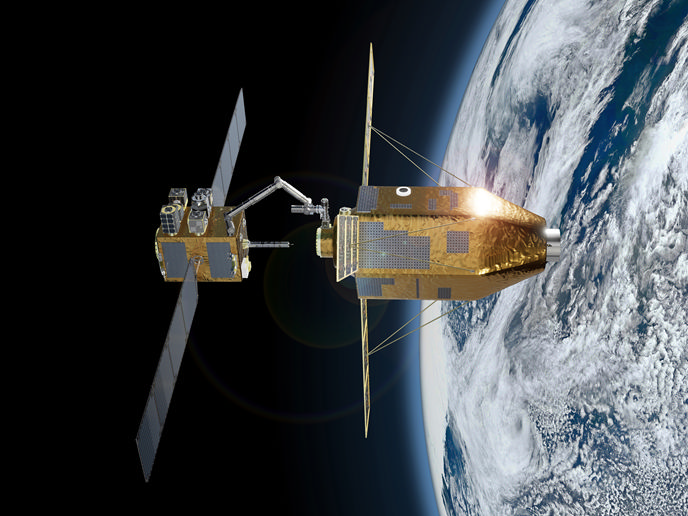
There are an estimated 15 000 functioning satellites(opens in new window) in orbit currently, and this number is doubling every two years. The ability to maintain these satellites after their launch could prolong their lifespan, reducing the need for new deployments, and help to prevent skies filled with space junk. “Keeping satellites operational for longer also has the potential to substantially improve the return on investment required to build and launch them,” says Stéphanie Behar-Lafenêtre(opens in new window), on-orbit servicing and space logistics product development manager at Thales Alenia Space in France. “This supports the more economical and responsible use of space, while strengthening European capabilities and competitiveness in an emerging services market.” Through advances in automated robotic docking systems, the EROSS IOD project is laying the foundation for making such in-orbit services a reality. Coordinated by Thales Alenia Space(opens in new window) and building on work carried out under previous EU-funded projects I3DS, EROSS and EROSSplus, EROSS IOD aimed to advance the use of autonomous servicers for the in-orbit maintenance, upgrade, assembly, repair and waste disposal of satellites. This required developing the capabilities to approach, capture and service satellites, in preparation for operations such as refuelling and equipment replacement.
Grabbing a satellite in the sky
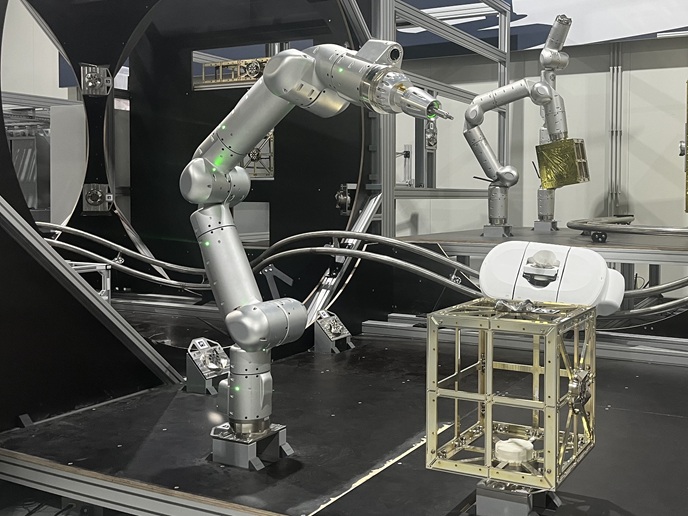
One such development is a rendezvous subsystem that combines computer vision algorithms with guidance, navigation and control. The German Aerospace Center (DLR) provided the robotic CAESAR arm(opens in new window), while capture and interface hardware, cameras and control software were developed by other members of the project consortium. “Sustained cooperation between partners and across research projects allowed individual technologies to develop into an integrated system capable of demonstrating demanding servicing operations on the ground,” notes Behar-Lafenêtre. The final ground demonstration included capture tests for satellites under both prepared and unprepared conditions, as well as assembly operations involving the replacement of key parts on the satellite under repair. The work demonstrates the feasibility of a service that can refuel and repair satellites in orbit. “These tests provided practical evidence that key elements could work together, strengthening the technical foundation for a future orbital demonstration,” adds Behar-Lafenêtre.
Towards in-orbit testing and commercialisation
The project’s technologies are now being developed towards flight and integration by the EU-funded EROSS SC project. The goal is to launch a pilot mission around 2030 that will demonstrate their in-orbit servicing capabilities and, subsequently, capture an end-of-life satellite for controlled re-entry. “We see EROSS IOD as an essential link between a decade of European research and the practical services now being pursued through EROSS SC,” remarks Behar-Lafenêtre. “Its legacy lies in the technologies, integration experience and partnerships supporting the planned demonstration.” If all goes as planned, we could see commercial servicing missions within the next decade – allowing operators to obtain more value from satellites while managing them more responsibly across their lifespan.