


Rapid assessment of infrastructures after earthquakes

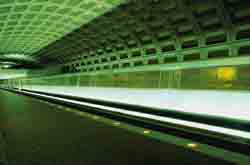
A consortium of engineers, researchers, and industrial specialists from Greece and Italy have produced an integrated package that provides a tunnel-deformation monitoring system. This system is founded on the use of distributed fibre optic sensors that in turn will supply the end-user with real-time measurements of deformation during an earthquake in vital areas of the tunnel linings and rail tracks. Another component of this integrated package is the decision support system (DSS) that processes the measurements obtained through the monitoring system and consequently formulates an assessment of the tunnel lining's capacity for surviving the aftershocks. The DSS includes a serviceability module designed to signal an alarm when the earthquake or aftershocks cause enough track or tunnel deformation to cause a train derailment or pieces of concrete to fall. Furthermore, another component of the DSS is a seismic stability module used to evaluate the unexpended dissipative capacity of the tunnel structure. The seismic stability module then uses this information to ascertain the survival capacity of the tunnel when it will be faced with consequent aftershocks. This team of specialists has formulated the deformation monitoring instrumentation in such a way that it operates at a frequency of approximately 75 Hz and is able to register in detail the history of deformations in an earthquake. Next, by using these records, a new energy-based theory for reinforced concrete seismic failure determines if the tunnel lining can survive aftershocks. It is this verified theory that is used as a methodology in the seismic stability module of the DSS. The consortium is looking for further research or development support as well as financial resources. Further research could be conducted to extend the feasibility of the new theory to steel structures. In fact, the market applications of this innovation are extremely valuable for social and emergency infrastructures in the following way: As this integrated package can monitor and assess the present (and future) condition of tunnels and train tracks during this type of natural disaster, it allows government and safety officials to determine whether or not tunnels or tracks are secure enough to permit the safe conduct of emergency personnel and supplies.