Reducing manufacturing cycle times by 50 percent


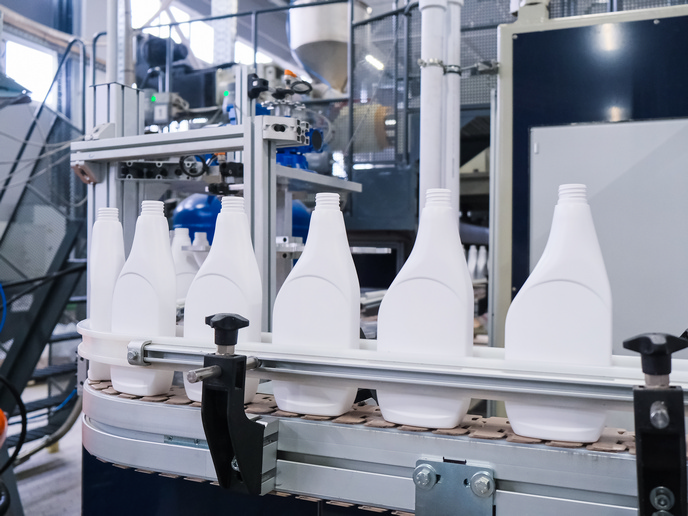
Technically known as rotomoulding, this polymer production method is better suited for large hollow products that require stress free strength with uniformed thickness; and water tanks are a typical product example. The process has six basic steps, but the most intrinsic steps, heating and cooling, is what this project investigated. To achieve a successful mould, two planes function perpendicular to each other with the spindle rotating on the primary axis and the mould on the secondary axis. During this process the liquid or powdered plastic is loaded into a hollow mould, sealed and inserted into an oven whereupon both of the axis start to rotate. The heat of the gas-fired ovens causes the plastic to melt, whilst the rotations ensure that the molten plastic is evenly distributed across the mould. It is then moved to a cooling chamber, typically with forced air and/or water circulating inside the mould. Too much heat usually accounts for over cooking of the melt, whereas cooling too fast can lead to warping and distortion. However, this process uses an intelligent online control capability that incorporates innovative heating and cooling devices, such that oven temperatures can be much hotter and the cooling system much faster. This leads to overall gains that are dramatic without greater capital costs to existing machinery. It is worth noting that besides there being zero waste in this innovative process, up to 50 percent of the raw materials can be recyclable plastic, thus easing environmental impact. Whilst the commercial application provides full data storage of all process data for quality tracking purposes, cycle times are also reduced by as much as 50 percent. Increased productivity and quality with reduced costs, making environmental and economic sense.