Protecting European animal genetic diversity

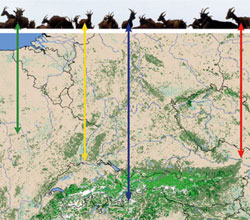
The aim of the project was to combine a variety of resources including molecular studies to address the conservation of sheep and goat genetic resources. Emphasis was placed on remote rural areas and local breeds, in danger of extinction. Project partners worked on the identification of the specific areas where intervention could be most valuable and efficient in terms of economic resources. Swiss-based EPFL used a variety of resources and approaches to identify the links and relationships between the different variables. These variables included environmental factors as well as social and economic factors. The levels at which the EPFL conducted its studies ranged from the individual animal level to the breed level. At the individual animal level the aim was to identify patterns of genetic variation in an attempt to close in on specific gene pools. At the farm level, scientists investigated socioeconomic parameters in order to create specific models of spatial analysis, linking farms to genetic variations. At the breed level, efforts were focused in the geographic analysis of breed location and the implementation of breed-based models. Further researched centred on territorial statistics to provide an overall view of the genetic variations within specific species in these geographic areas. The data derived from the ECONOGENE project can be used for the accurate economic analysis of specific rural areas in Europe. Such analysis could form the first step towards sustainable development in these areas and the long-term protection of genetic variety of sheep and goat species.